ZANNIER SONOP A Journey Through Space and Time
The Distance Before Time
Some journeys begin when we arrive.
Others begin much earlier — somewhere between the last familiar road and the moment the landscape becomes so vast that distance itself seems to acquire a different meaning.
Namibia belongs to the latter.
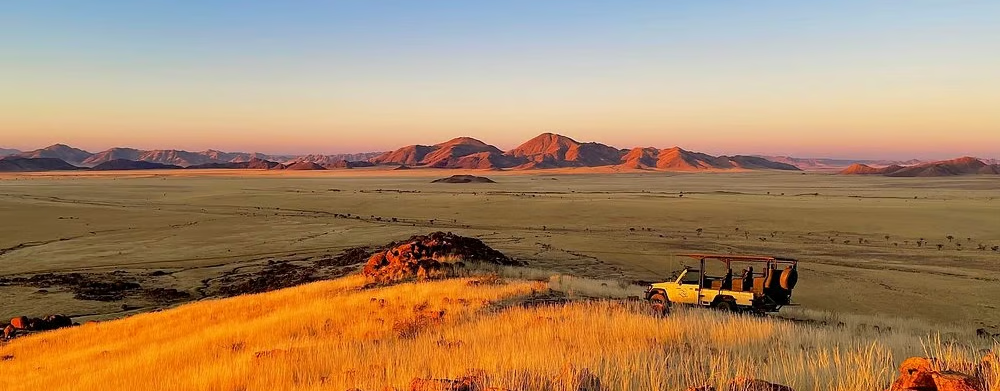
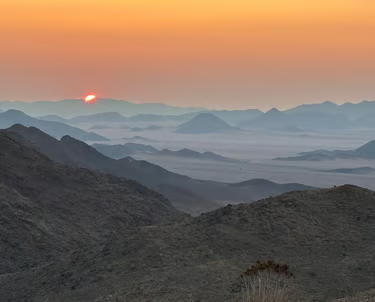
There are places on Earth where nature appears to have been arranged for human admiration. The Namibian desert is not one of them. It is too immense, too ancient, too indifferent to our presence. Mountains rise from plains that seem to continue beyond perspective. Granite boulders balance against enormous skies. Vegetation appears sparingly, almost defiantly, and light travels across the land with nothing to interrupt it.
Here, emptiness is not absence.
It is scale.
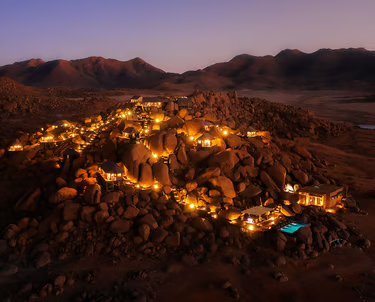
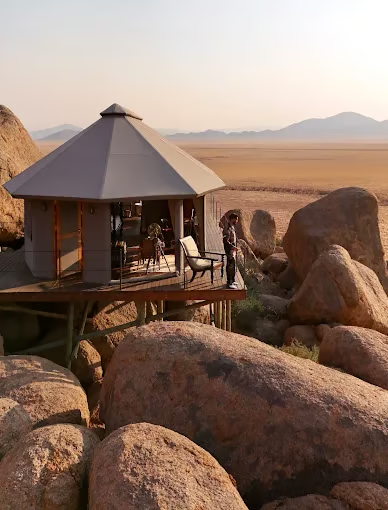
And somewhere within that scale, among immense granite formations in the southern Namibian landscape, sits Zannier Sonop.
From a distance, there is remarkably little to see.
That is the first clue.
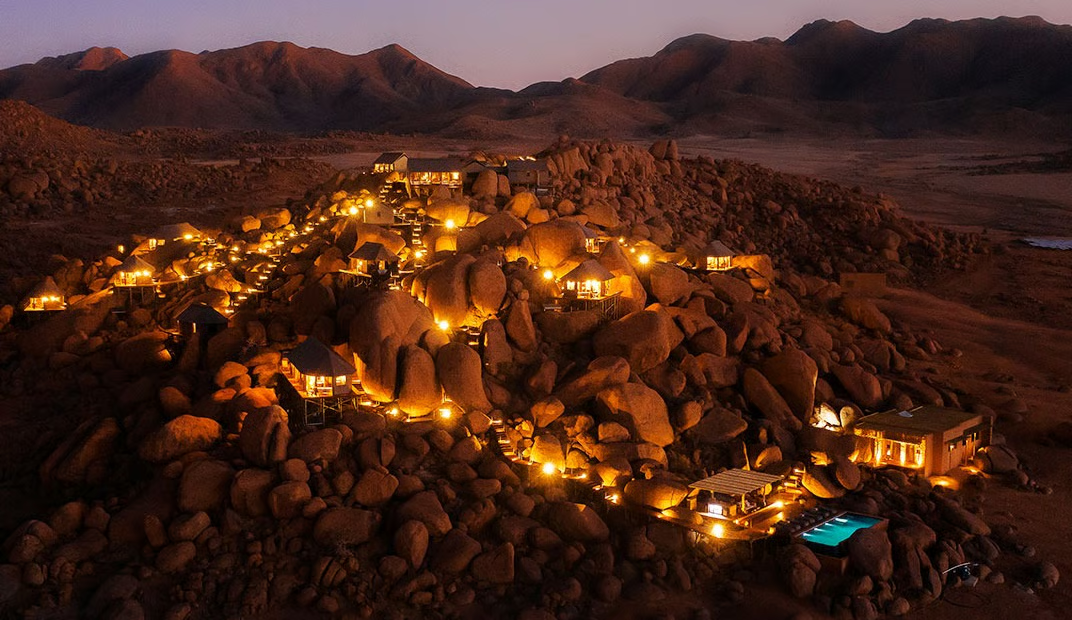
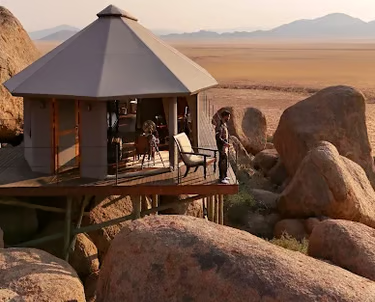
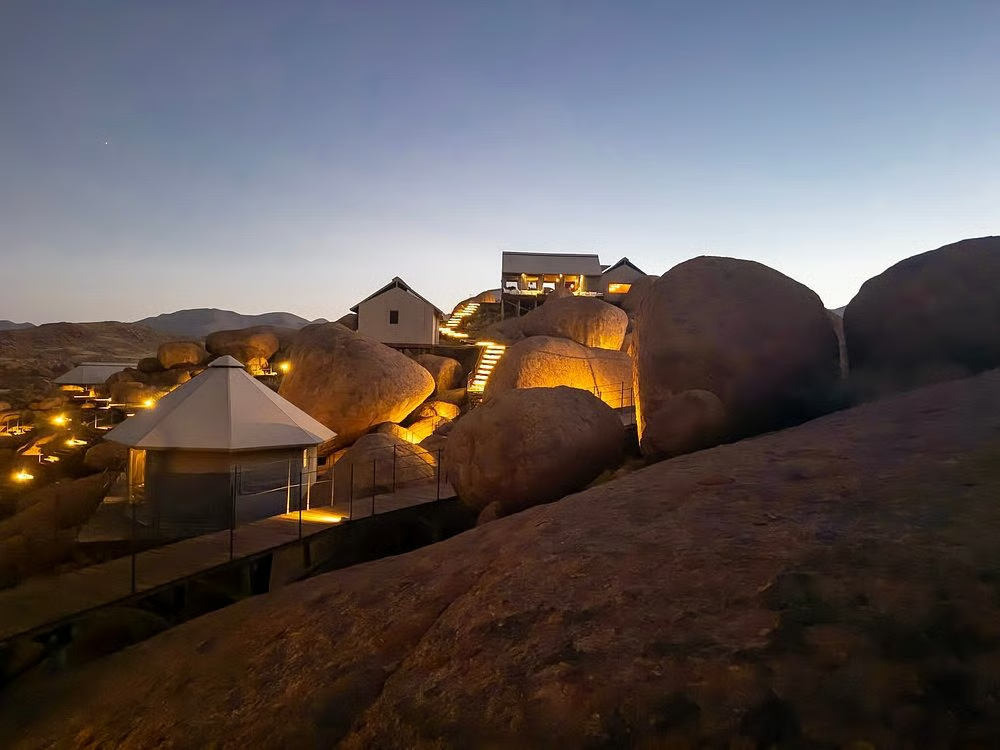
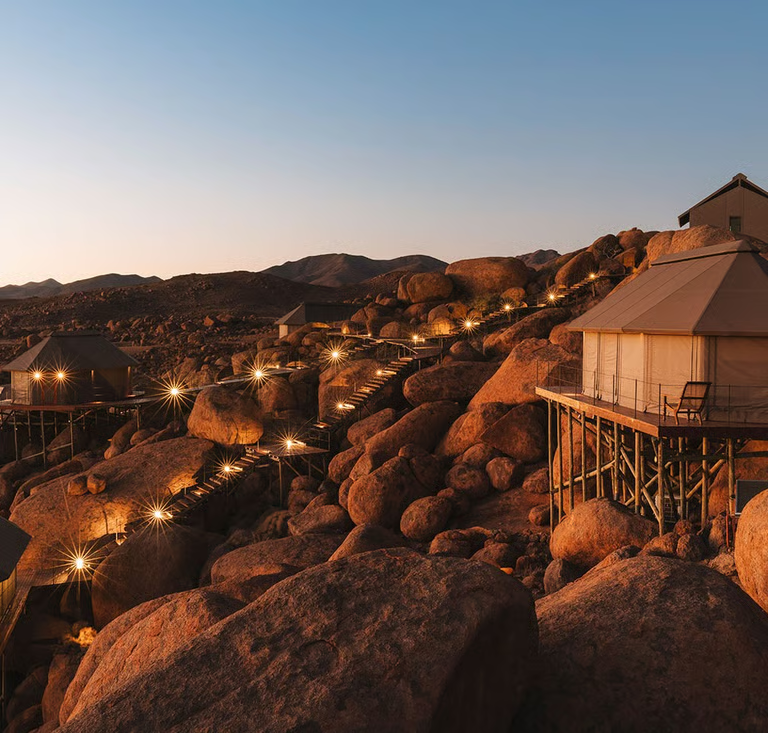
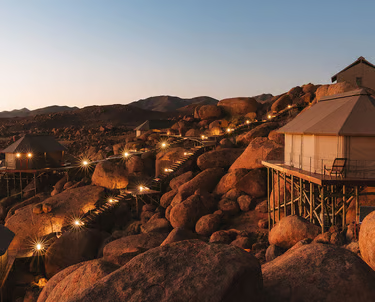
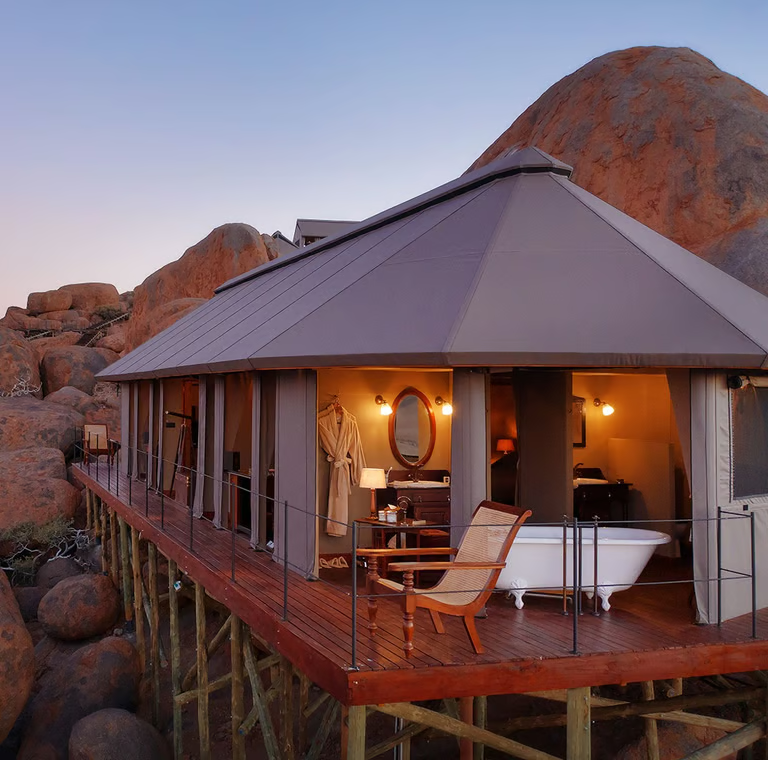
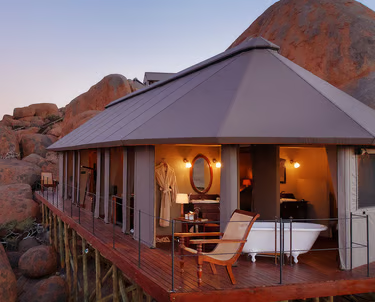
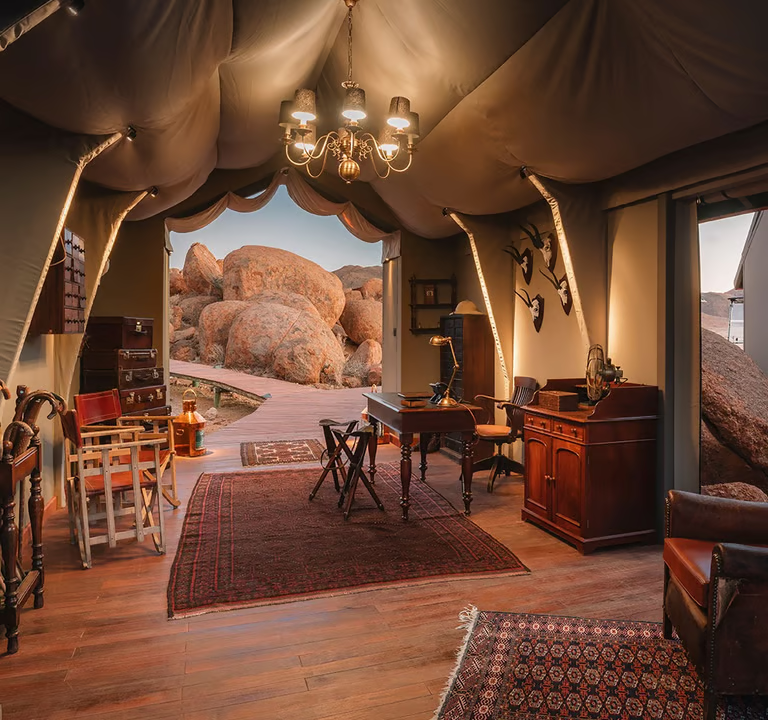
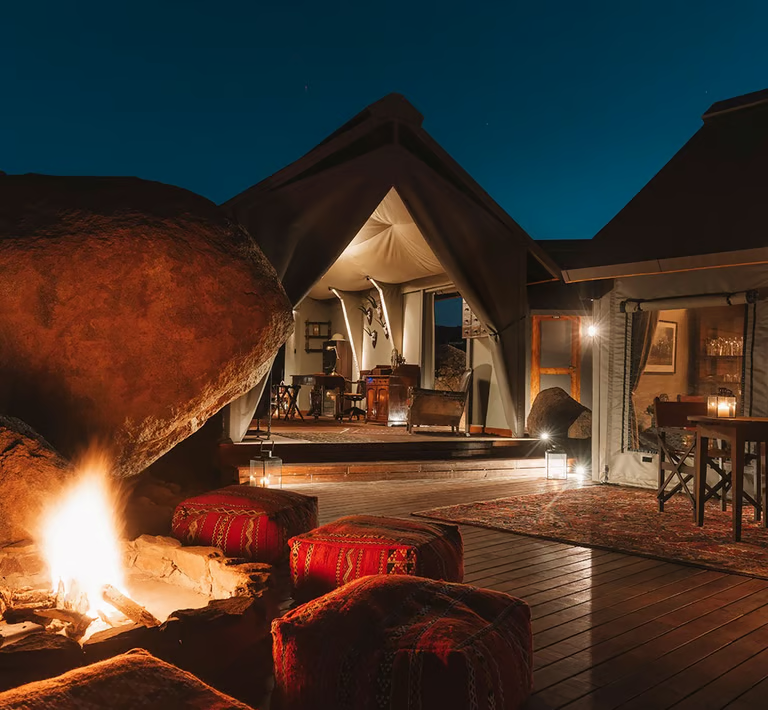
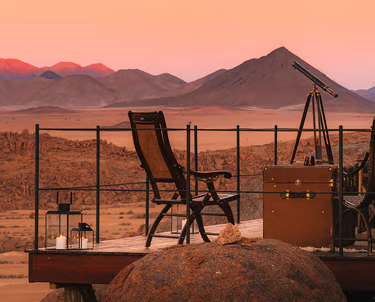
No monumental building announces the resort. No contemporary structure attempts to impose itself upon the horizon. Instead, a collection of canvas tents appears almost improbably among the rocks, elevated above the desert as though an expedition had arrived decades ago, established camp — and simply never left.
Then you step inside.
And time shifts.
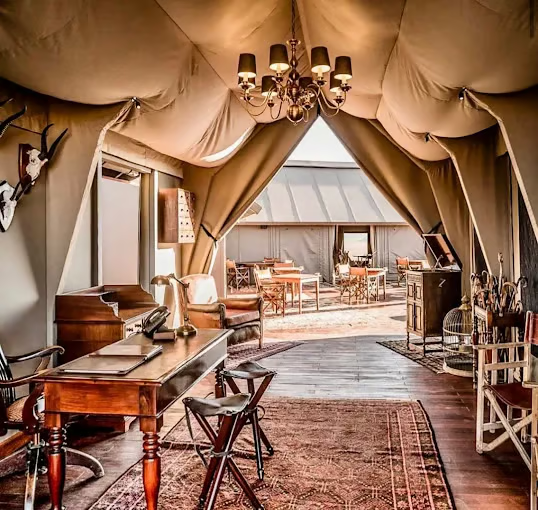
There are leather trunks.
Dark timber.
Brass fittings.
Persian rugs.
Antique-style writing desks.
Binoculars.
Maps.
Old books.
Objects that seem to carry stories from journeys whose travelers have long since disappeared.
A gramophone would not feel out of place.
Neither would a handwritten letter waiting to be sent across a continent.
Sonop does not merely reference the great safari camps of the early twentieth century.
It constructs a remarkably complete fantasy around them.
And fantasy is precisely the right word.
Because this is not an attempt to reproduce history with archaeological accuracy. Nor should it be mistaken for nostalgia for everything that belonged to that era. Instead, Sonop borrows from the romantic mythology of exploration — the trunks, the field notes, the canvas, the ritual of dressing for dinner, the idea of crossing an enormous landscape with time enough to observe it.
It takes the visual language of another age and turns it into theatre.
Very sophisticated theatre.
The effect is immediate because it contradicts almost everything contemporary luxury hospitality has taught us to expect from the desert.
We have become accustomed to desert architecture defined by reduction: concrete, glass, pale stone, severe geometry, monochromatic interiors designed to disappear into the landscape.
Sonop chooses another direction entirely.
It brings memory into emptiness.
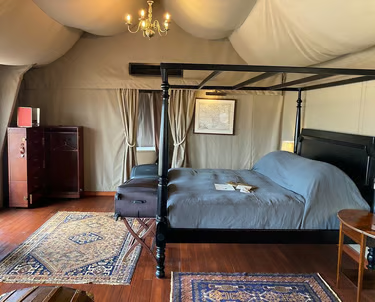
Inside the tents, abundance replaces austerity. Layers of fabric soften the canvas walls. Dark furniture sits against warm rugs. Carefully selected objects create the feeling that someone has been living — and traveling — here rather than simply decorating a room.
Yet open the tent and all that visual richness suddenly ends.
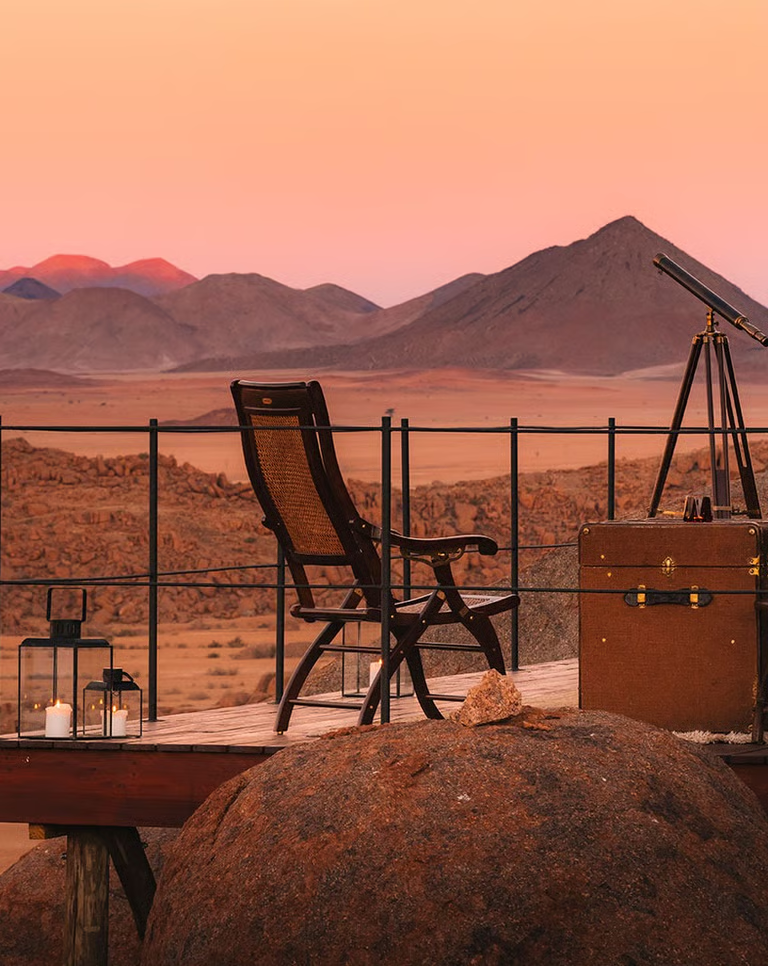
Outside there is almost nothing.
Rock.
Sand.
Sky.
Distance.
The contrast is intoxicating.
Inside, the intimacy of another era.
Outside, geological time.
And perhaps this is where Sonop becomes more interesting than its aesthetic premise initially suggests.
Because there are actually two kinds of time operating here.
The first is the human time Sonop has chosen to evoke: roughly a century ago, when travel to places this remote still carried the mythology of expedition. When luggage was made to survive journeys rather than airport conveyors. When maps were unfolded across tables. When distance could not be defeated by a screen or a flight tracker.
But beyond the canvas lies another chronology altogether.
The desert does not measure itself in decades.
Its rocks, mountains and plains belong to a scale of time against which the difference between 1920 and 2026 becomes almost comic.
Human nostalgia suddenly looks very small.
That tension gives Sonop its peculiar magic.
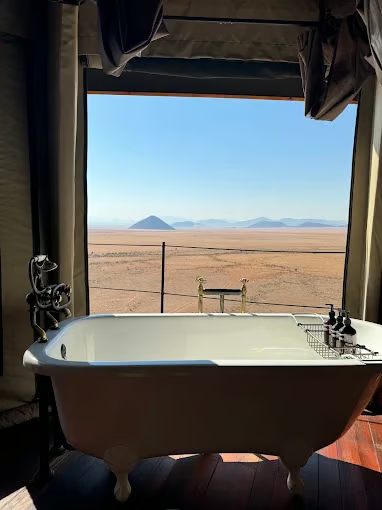
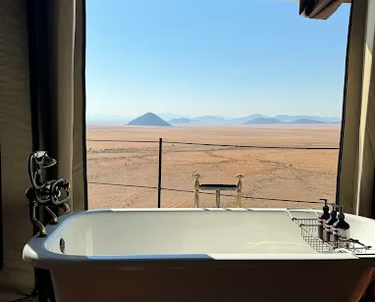
You may sit at an antique-style desk imagining another century, but beyond the window is a landscape that makes centuries irrelevant.
You may dress for dinner as though participating in an elegant safari from another age, but the stars above belong to no period at all.
You may arrive with every contemporary comfort available to you and still find yourself staring into a horizon so empty that modernity seems temporarily theoretical.
This is why the journey to Sonop is not simply geographical.
You travel through space first.
Far enough for cities to disappear.
Far enough for architecture to become almost invisible.
Far enough for silence to stop feeling like the absence of something.
And then, almost without warning, you travel through time.
A canvas entrance opens.
A brass lamp glows.
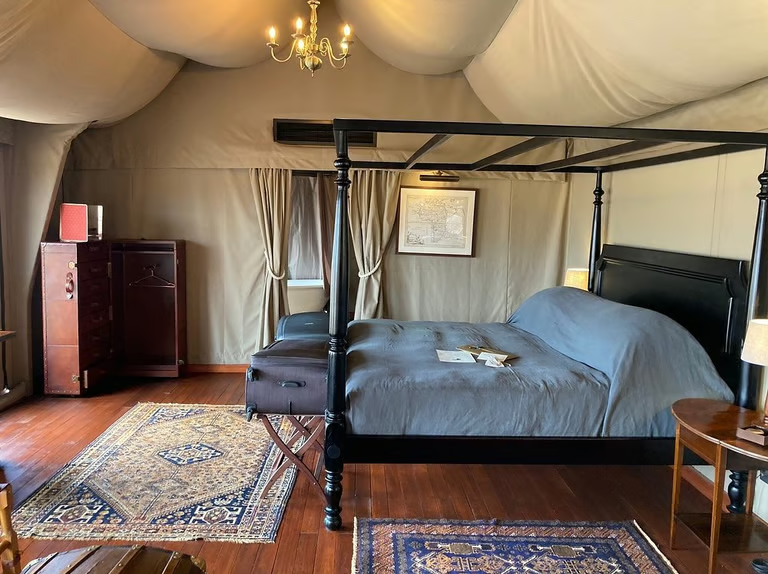
A trunk waits beside a bed.
The desert wind moves against the tent.
And for one delicious, completely irrational moment, the twenty-first century feels very far away.
At Sonop, perhaps the destination is not Namibia alone.
It is the extraordinary distance between the world we came from — and the world we are willing, for a few days, to imagine.
The Theatre of Another Era
A fantasy becomes convincing not through its grand gestures, but through its details.
At Sonop, the illusion lives everywhere.
In the weight of a leather trunk.
In the glow of a brass lamp against canvas.
In a writing desk arranged as though someone might return at any moment to finish a letter.
In books, maps, binoculars and objects whose purpose seems to belong to a world in which travel was still accompanied by mystery.
Nothing appears accidental.
And yet nothing should feel like a museum.
That distinction is essential.
Sonop is not asking guests to observe another era from behind glass. It invites them to inhabit an imagined version of it — comfortably, playfully and with all the contradictions that contemporary luxury allows.
Because beneath the romance of the explorer's camp lies an experience of considerable refinement.
The tents are generous and deeply layered, their interiors combining the tactile vocabulary of expedition life with the comforts expected from modern high-end hospitality. Canvas creates intimacy. Dark timber adds gravity. Leather acquires patina and warmth. Rugs soften the floor. Metal details catch the low light.
And everywhere, objects create narrative.
This is interior design functioning almost like costume design.
A room does not simply need to be beautiful.
It needs to make the story believable.
At Sonop, that story becomes particularly seductive after sunset.
The desert, so visually dominant during the day, gradually loses its edges. Granite formations become silhouettes. The enormous Namibian sky darkens. Lamps begin to glow inside the tents, and suddenly those small pockets of amber light scattered among the rocks seem impossibly intimate against the surrounding vastness.
Day belongs to the landscape.
Night belongs to atmosphere.
Dinner becomes part of the performance.
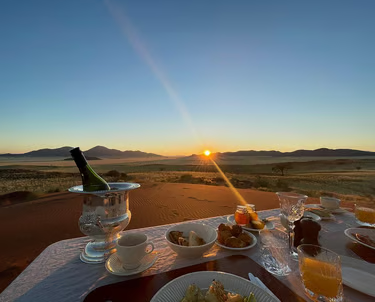
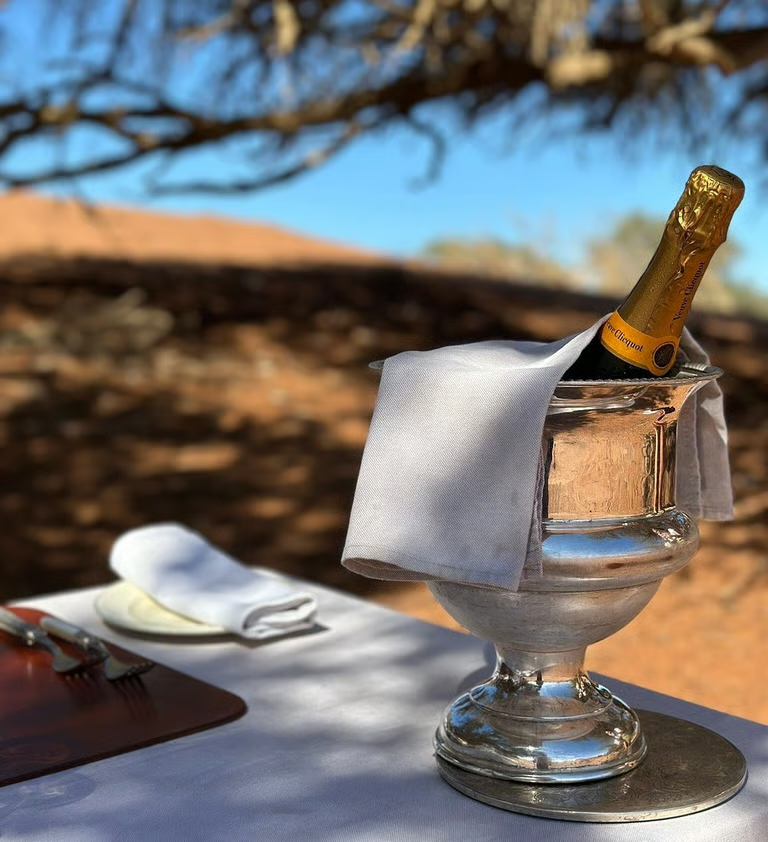
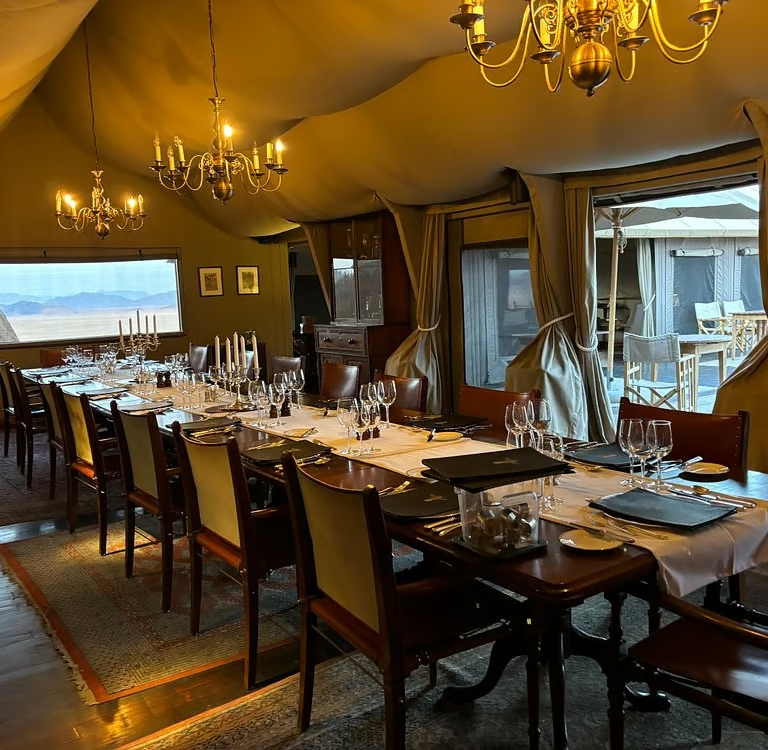
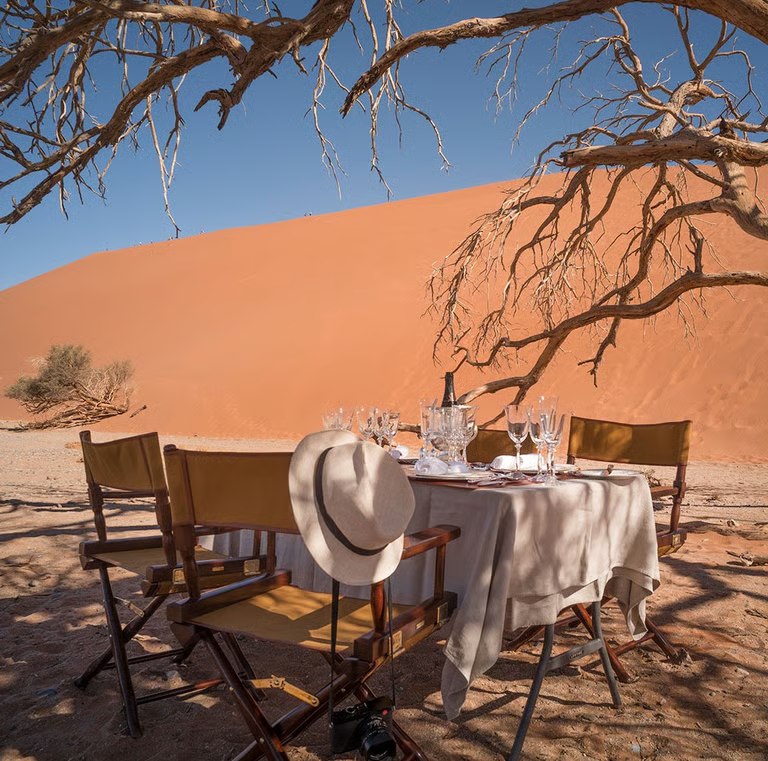
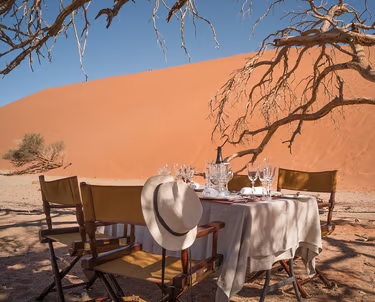
There is something wonderfully theatrical about bringing ceremony into a place where nature requires none. A beautifully set table in the middle of the desert is inherently irrational — and therefore delightful.
Glassware catches candlelight.
Conversation slows.
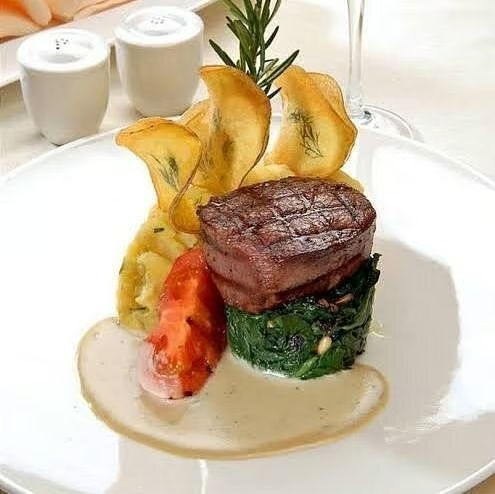
Food arrives with precision.
The wilderness remains just beyond the illuminated space.
And for a few hours, the rituals of another age return: dressing for dinner, sitting properly at a table, allowing a meal to unfold in courses rather than treating it as another appointment to complete.
This is not nostalgia in the literal sense.
Few of us actually lived in the period Sonop evokes.
What we are nostalgic for is perhaps an idea of time.
A world before permanent availability.
Before every journey could be documented while it was still happening.
Before distance became something technology was expected to defeat.
Sonop transforms that longing into experience.
Morning might begin not with a screen, but with light entering through canvas.
The day might unfold through the landscape: a drive across the reserve, a horse moving through the desert, a walk among rocks that seem unchanged by human history.
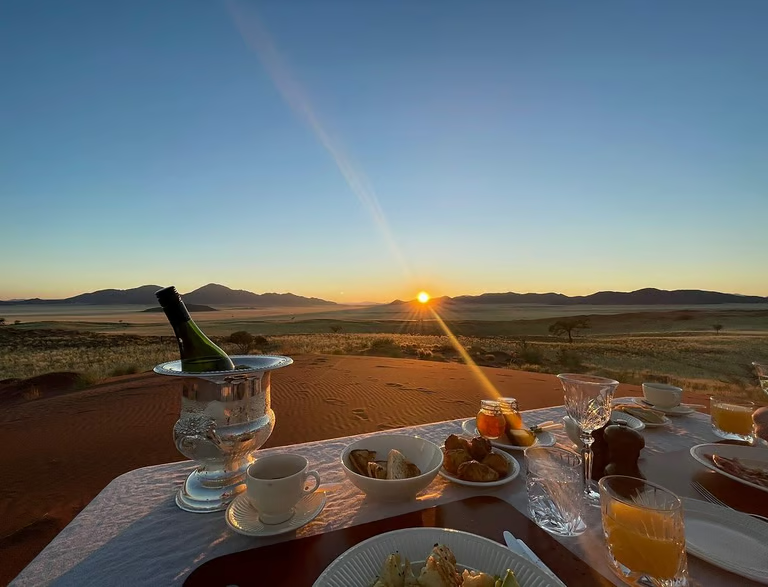
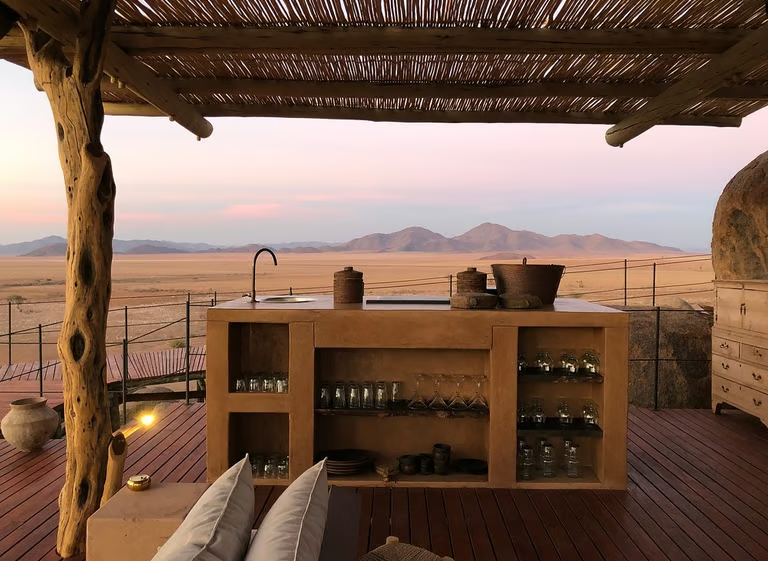
There may be breakfast overlooking emptiness.
An afternoon beside the pool.
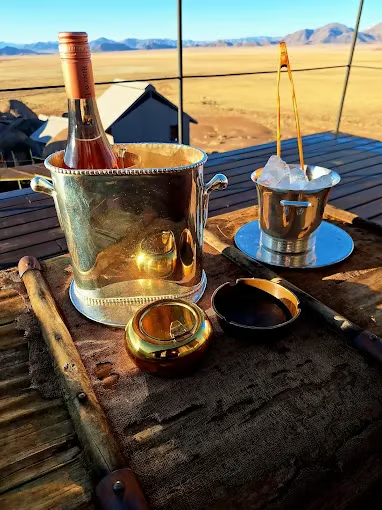
A drink as the sun begins to fall.
A moment with binoculars directed toward something moving far across the plain.
None of these activities is revolutionary.
That is precisely why they work.
Sonop does not need to manufacture constant stimulation because the central experience is already unusual enough:
being there.
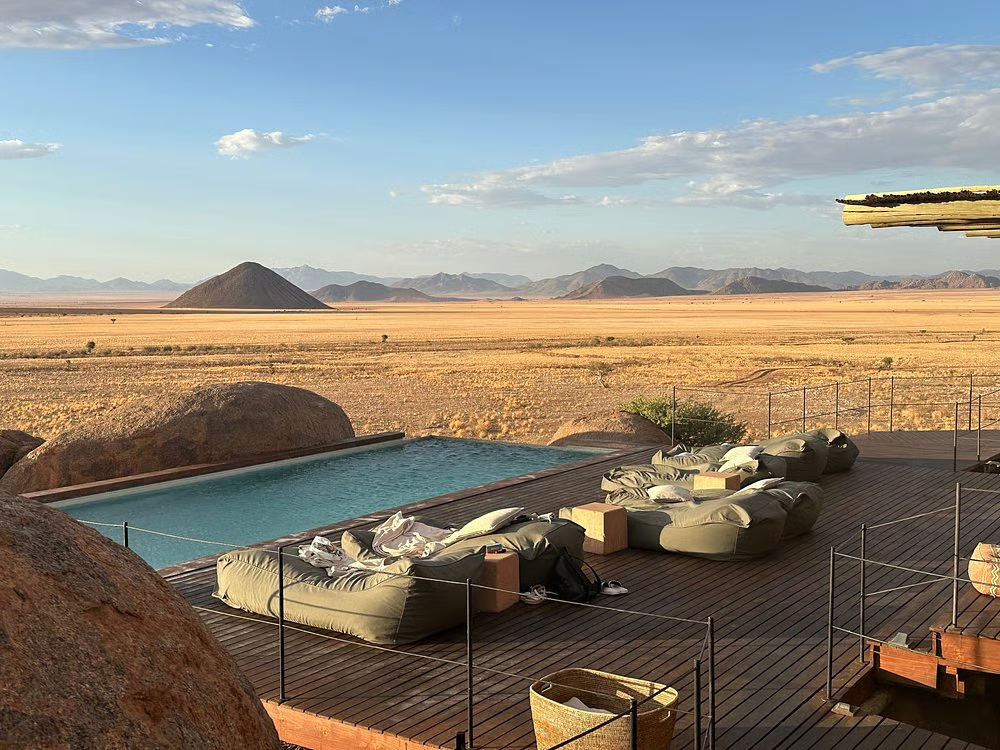
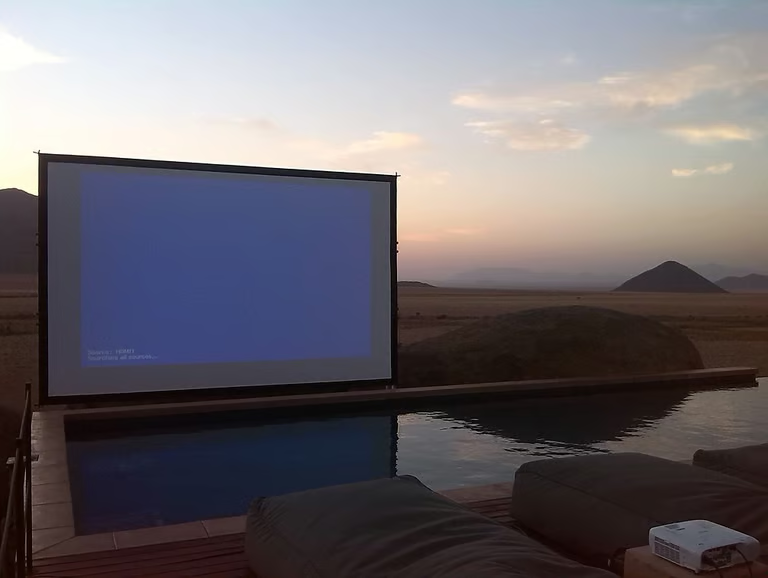
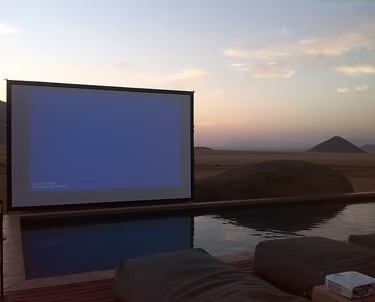
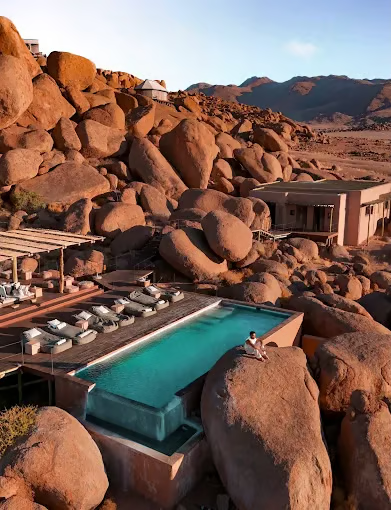
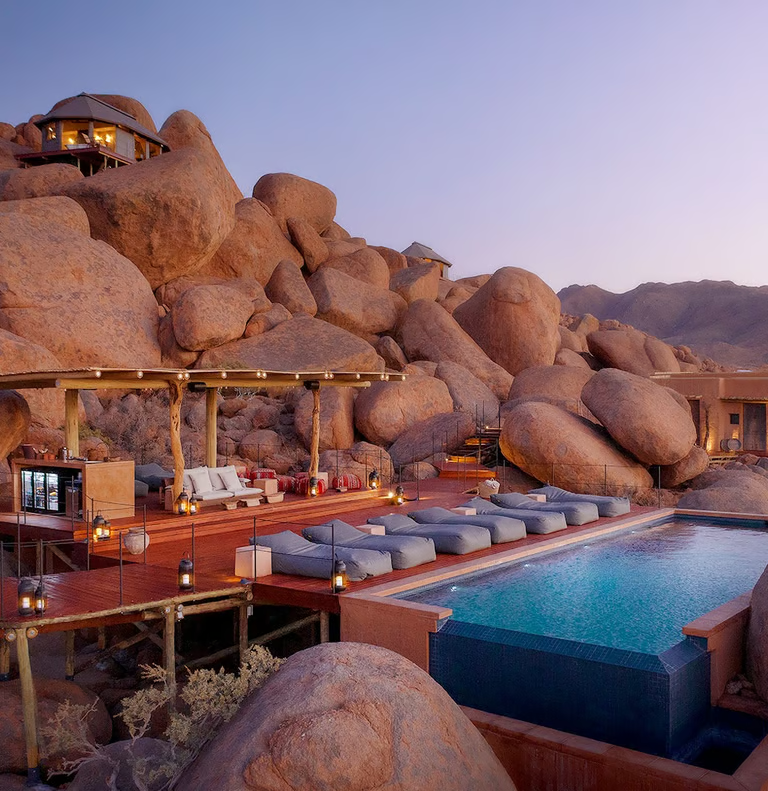
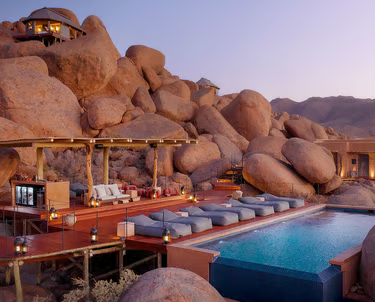
The swimming pool perhaps expresses this contradiction better than almost anything else.
Water in the desert has always carried symbolic power.
At Sonop, a pool positioned against such an austere landscape becomes almost surreal — a dark, controlled plane of water suspended among rocks, confronting an environment defined by dryness and scale.
You enter.
The body cools.
Beyond the edge, the desert continues.
There is no city skyline.
No neighboring resort.
No architecture demanding attention.
Just the improbable sensation of floating while an enormous landscape refuses to acknowledge you.
This is luxury not as spectacle, but as contrast.
Cool water against desert heat.
Soft fabric against granite.
Candlelight against darkness.
A carefully prepared meal against wilderness.
A comfortable bed beneath a sky that makes roofs seem unnecessary.
Each element becomes more intense because its opposite is so close.
And then there are the stars.
In cities, we have almost forgotten how crowded the night sky can be.
Artificial light removes the universe gradually, until only its brightest fragments remain.
The desert gives it back.
When darkness arrives properly in Namibia, the sky ceases to function as background.
It becomes architecture.
Suddenly the nostalgic objects inside Sonop — the maps, the binoculars, the old instruments, the mythology of exploration — acquire another meaning.
For centuries, travelers looked upward not simply for beauty, but for orientation.
The stars told them where they were.
At Sonop, we know perfectly well where we are. A phone could provide coordinates within seconds.
But knowledge does not necessarily eliminate wonder.
Perhaps the opposite.
To stand beneath that sky with every modern convenience waiting only a few steps away and still feel extraordinarily small is one of the quiet pleasures of the place.
Because Sonop's fantasy ultimately succeeds only when we momentarily forget the machinery making it possible.
The logistics.
The technology.
The carefully calibrated service.
The contemporary systems hidden behind the canvas.
All of it must disappear.
What should remain is simpler.
A lamp.
A glass.
A chair.
A desert.
A sky.
And enough imagination to allow the rest of the world to recede.
That is the peculiar sophistication of Sonop.
It understands that luxury can sometimes be a form of theatre.
Not theatre designed to deceive us.
Theatre designed to give us permission, for a little while, to believe.
Above Time
There comes a moment at Sonop when even the desert must be left behind.
Not entirely.
Just enough to see it differently.
It begins before the day has properly decided to arrive.
The air is cool. The landscape remains suspended between darkness and the first suggestion of light. Conversation feels somehow inappropriate at this hour, as though the desert has not yet given permission for noise.
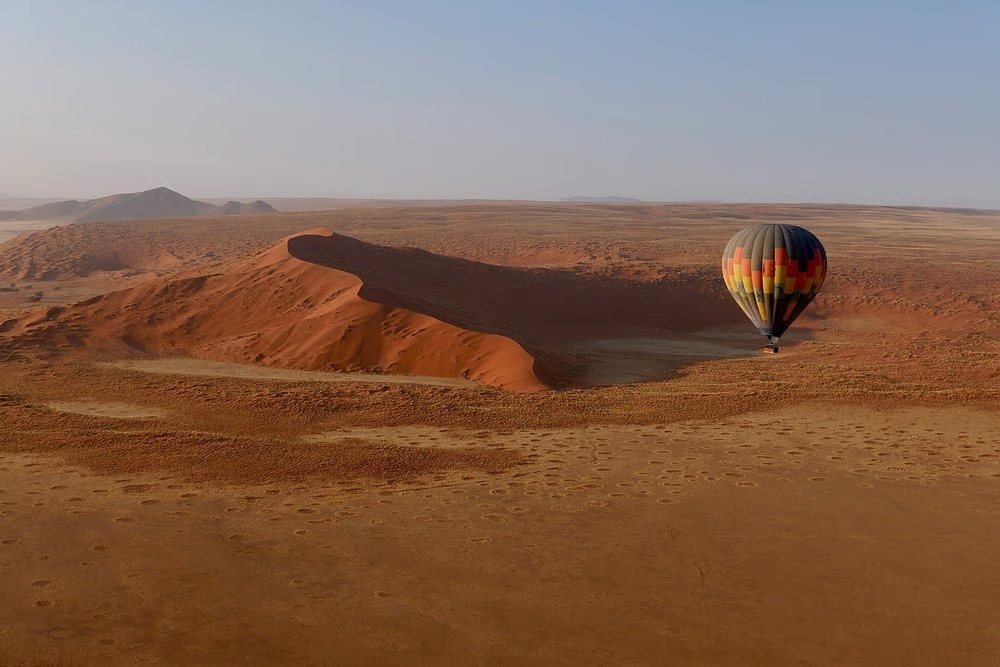
And then, slowly, a balloon begins to rise.
At first, the movement is almost imperceptible.
The ground simply starts moving away.
Granite boulders that seemed monumental from below begin to shrink. Paths become lines. Vegetation becomes texture. Human interventions gradually lose their importance.
And somewhere beneath you, Sonop begins to disappear.
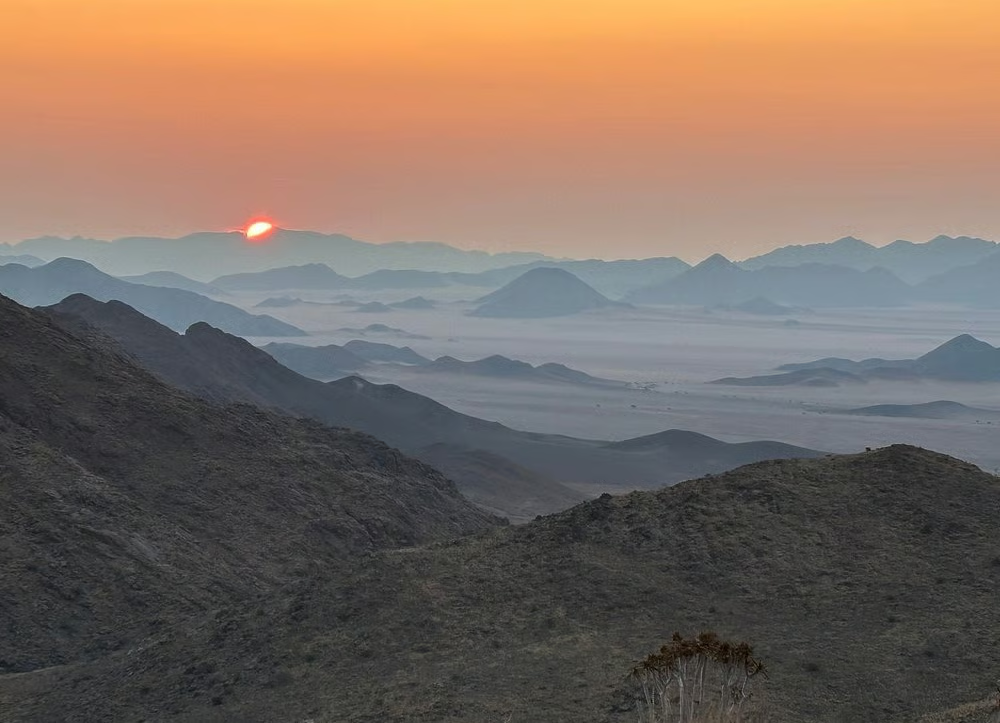
This may be one of the most beautiful ways to understand Namibia.
From the ground, the desert surrounds you.
From above, it reveals its composition.
Mountains, plains, rock formations and enormous stretches of empty land begin arranging themselves into patterns impossible to perceive at human height. Shadows travel across the terrain. The rising sun touches one ridge while another remains in darkness. Colors that appeared muted from below suddenly separate into ochre, gold, brown, rust and violet.
And the horizon seems to move farther away.
There is something almost absurdly appropriate about experiencing this landscape from a balloon.
No engine dominates the moment.
There is no sensation of conquering distance.
You drift.
The wind decides much of what happens next.
For travelers accustomed to controlling almost every aspect of a journey, there is a certain elegance in surrendering direction to the air.
Perhaps this is what exploration should occasionally feel like.
Not conquest.
Not speed.
Not arrival.
Suspension.
For a while, there is nowhere to go because you are already inside the experience.
And from that height, Sonop's elaborate game with time suddenly acquires another dimension.
Below, inside the tents, human history has been carefully reconstructed through objects.
Leather trunks.
Maps.
Writing desks.
Brass lamps.
Books.
The romance of an imagined expedition from another century.
But from the balloon, none of that matters.
The desert predates every object in those rooms.
It predates the idea of safari.
It predates the borders on the maps.
It predates the languages in which travelers attempted to describe it.
Up here, the twentieth century and the twenty-first become almost indistinguishable.
Both are simply brief interruptions in geological time.
And perhaps this is where the title of the journey finally reveals itself.
Space and time are not separate experiences at Sonop.
Distance alters our relationship with time.
The farther we move from the familiar, the less authority our usual rhythms seem to possess.
Meetings disappear.
Traffic disappears.
Notifications become ridiculous.
Hours stop being containers that must be filled.
Morning becomes light.
Afternoon becomes heat.
Evening becomes shadow.
Night becomes stars.
The desert returns time to its oldest measurements.
And Sonop, with all its beautiful theatricality, allows us to play somewhere between those scales.
We can inhabit the fantasy of another era without pretending we truly belong to it.
We can enjoy the ritual
Contact
Contact us for partnerships, collabs, and any questions.
phone number
+1 561 601 2069
© 2025. All rights reserved.