
THE RITZ-CARLTON MALDIVES Drawing a Circle on the Horizon
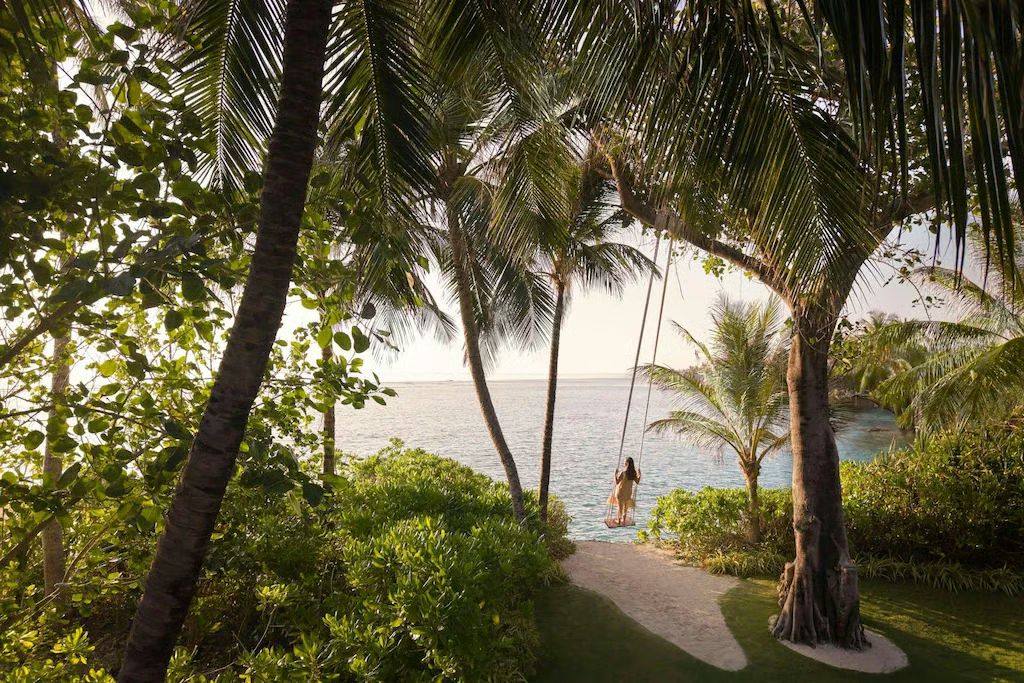
The Geometry of Paradise
Before paradise became a destination, it was geometry.
A line between water and sky.
In the Maldives, that line can feel almost absolute. The Indian Ocean stretches outward with so little interruption that architecture faces an unusual challenge: how do you build in a landscape that already appears complete?
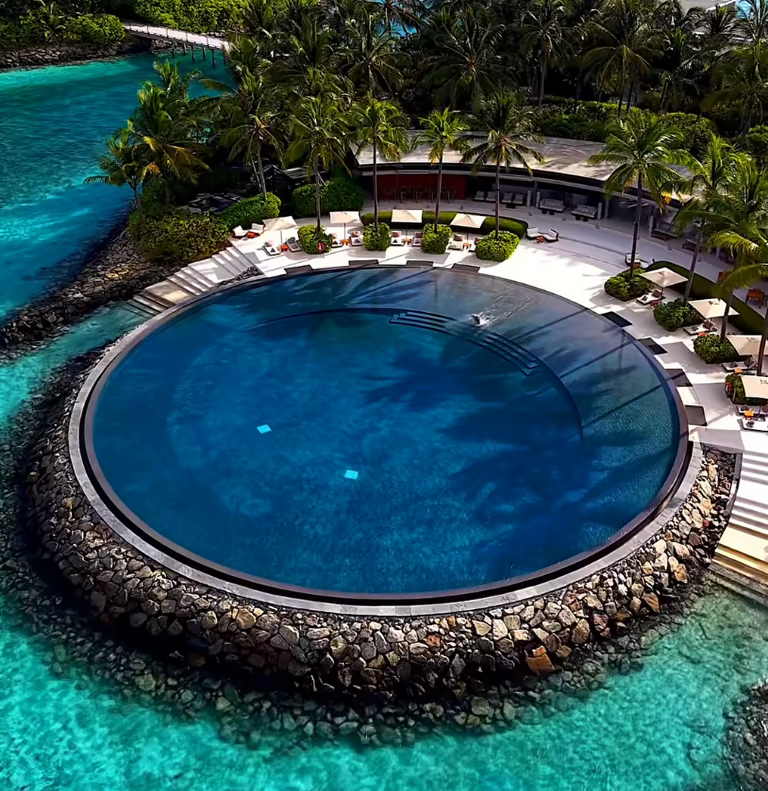
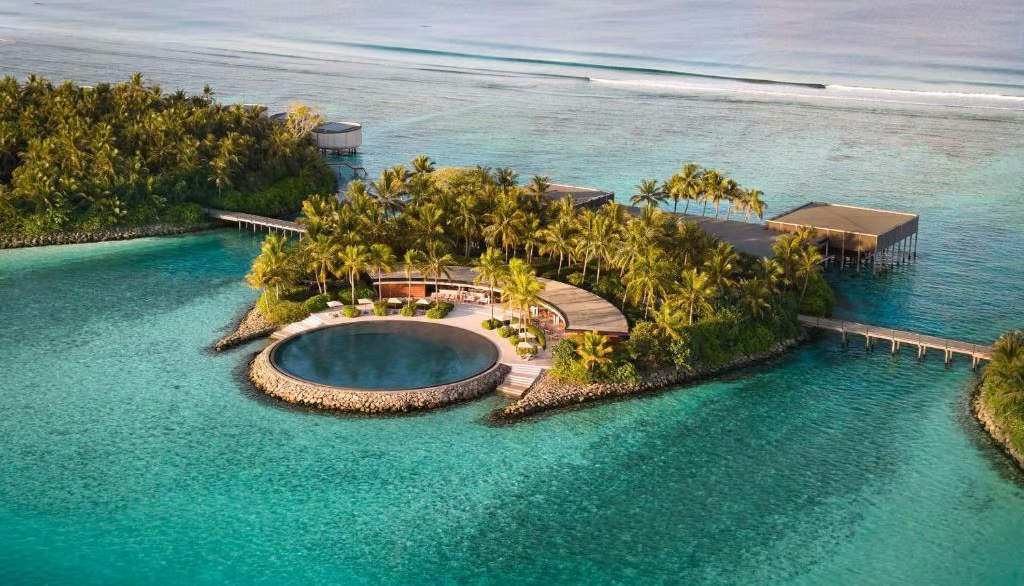
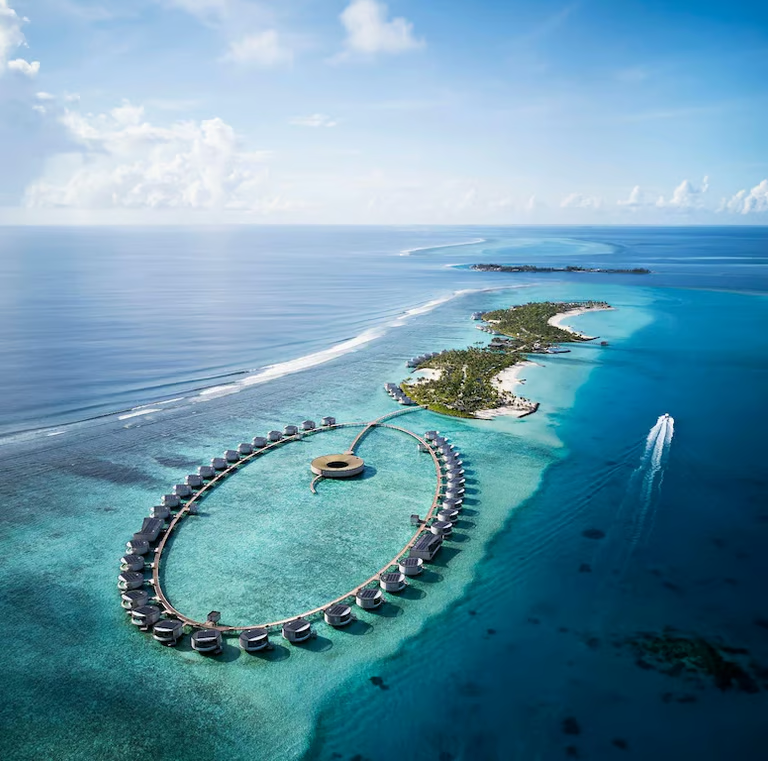
At The Ritz-Carlton Maldives, Fari Islands, the answer begins with a circle.
Not a tower.
Not a monument.
Not an architectural gesture designed to conquer the view.
A circle.
Simple, continuous and strangely natural against the endless horizontal of the sea.
The late Australian architect Kerry Hill understood restraint exceptionally well. Throughout his work, architecture rarely existed as an isolated object. It responded to climate, landscape, material and light — modernism softened by place.
In the Maldives, that philosophy becomes almost elemental.
Water.
Sky.
Light.
And geometry.
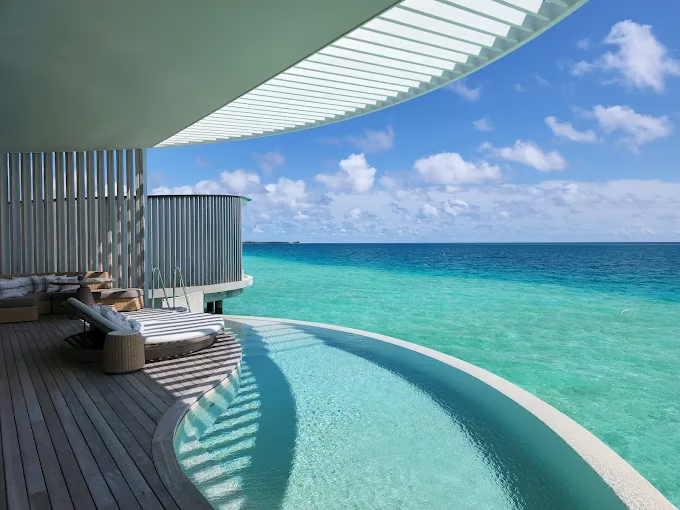
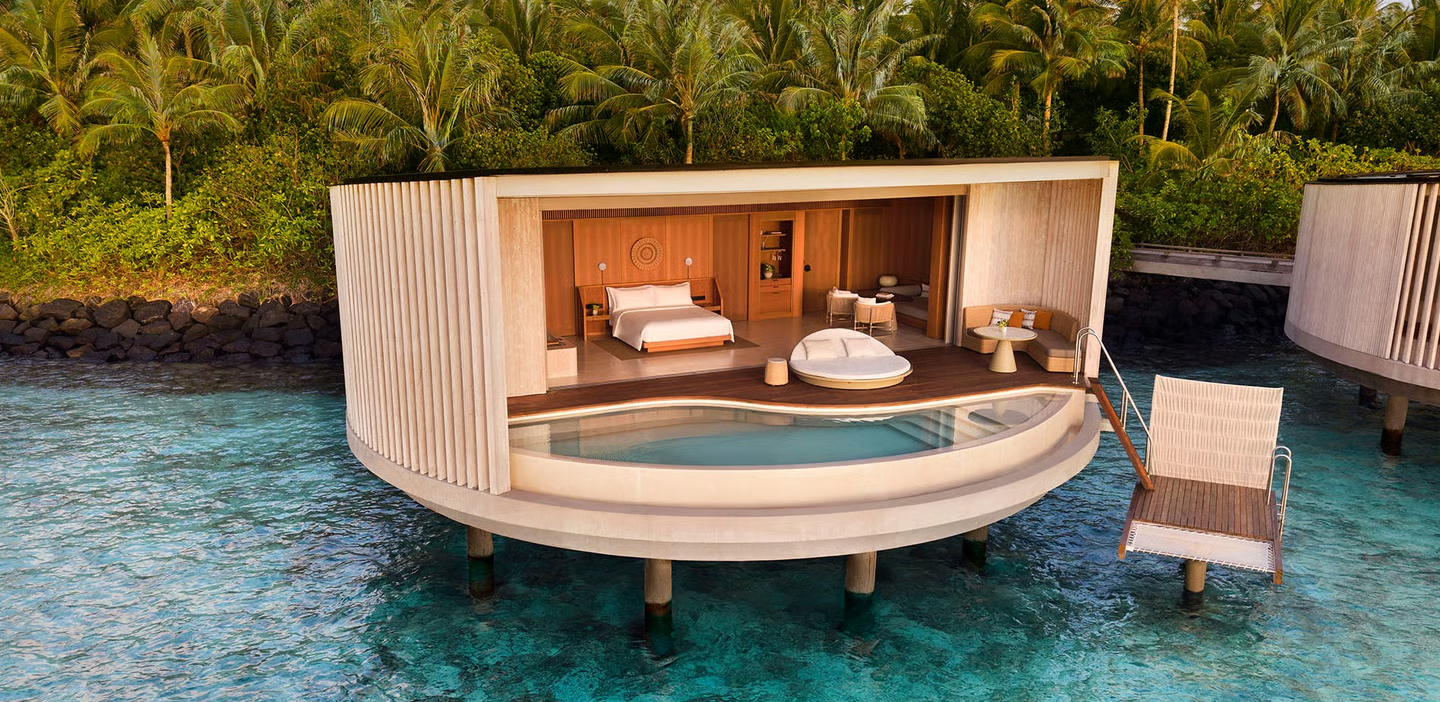
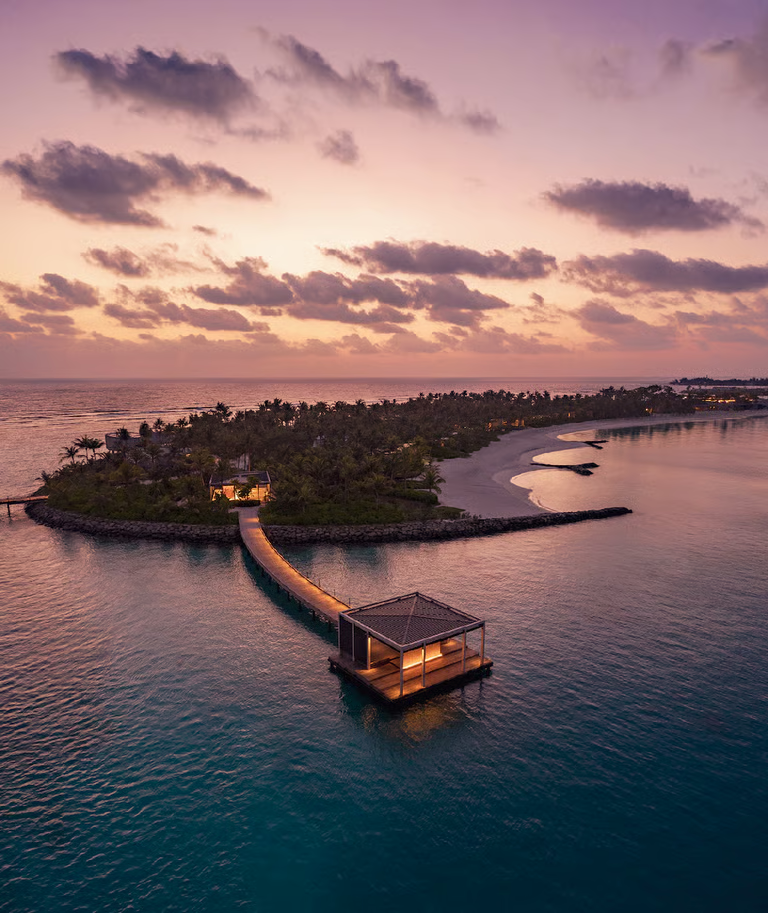
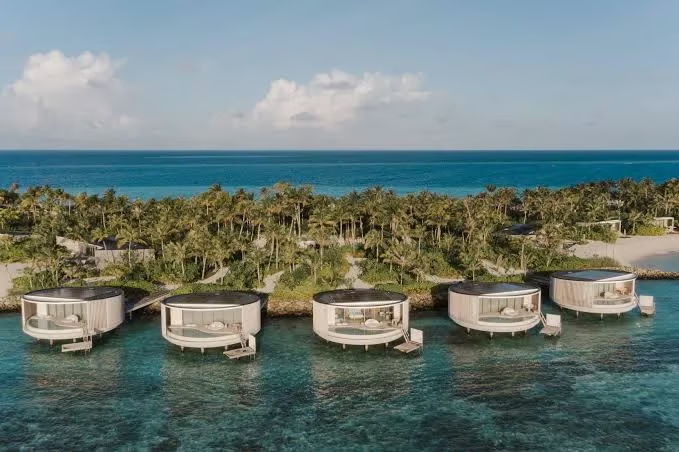
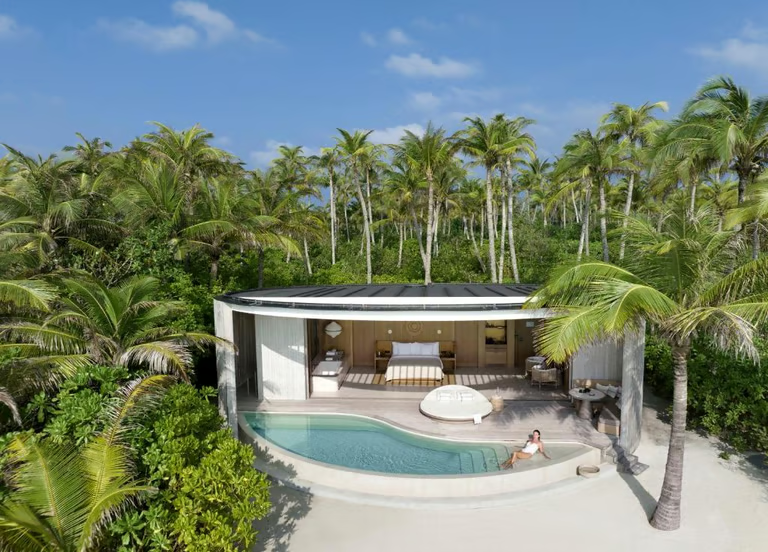
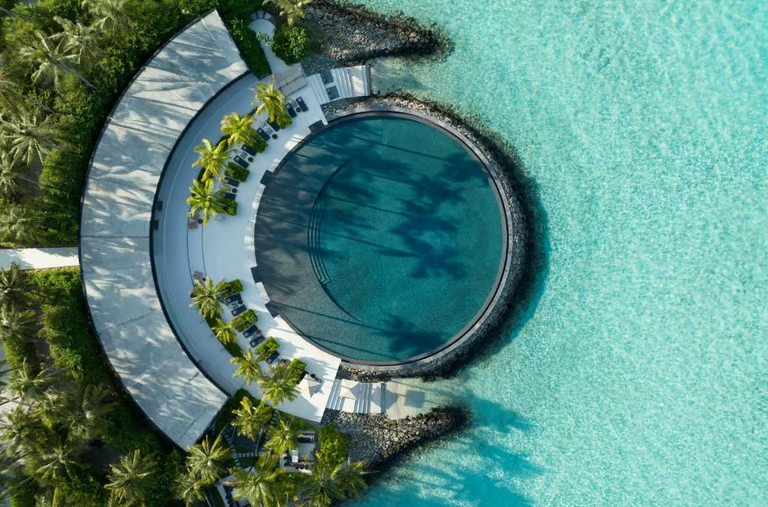
From above, the resort reveals itself with particular clarity. Villas extend across the lagoon in disciplined lines while circular forms interrupt the horizontality like marks drawn deliberately across an enormous blue page.
The effect is graphic, almost abstract.
But architecture is never experienced from above.
At human height, geometry becomes something else.
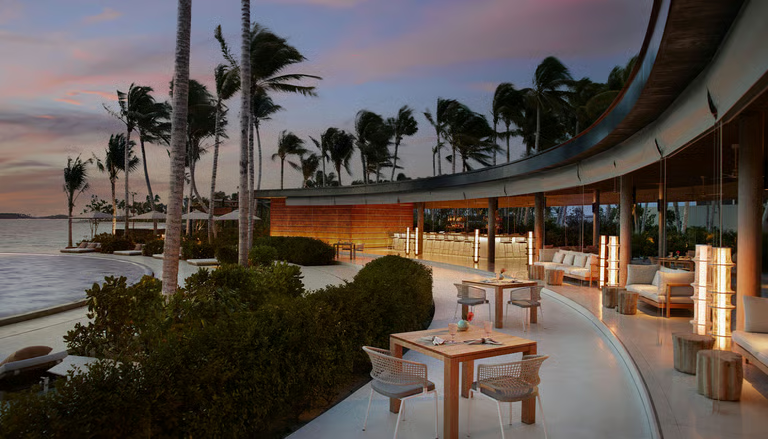
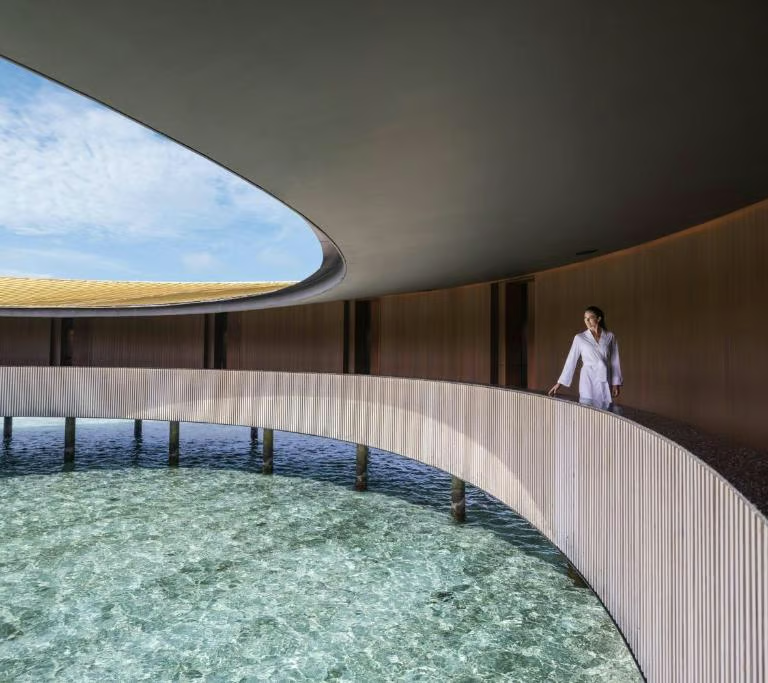
A curved wall changes the way we enter a room.
A circular space redirects the eye.
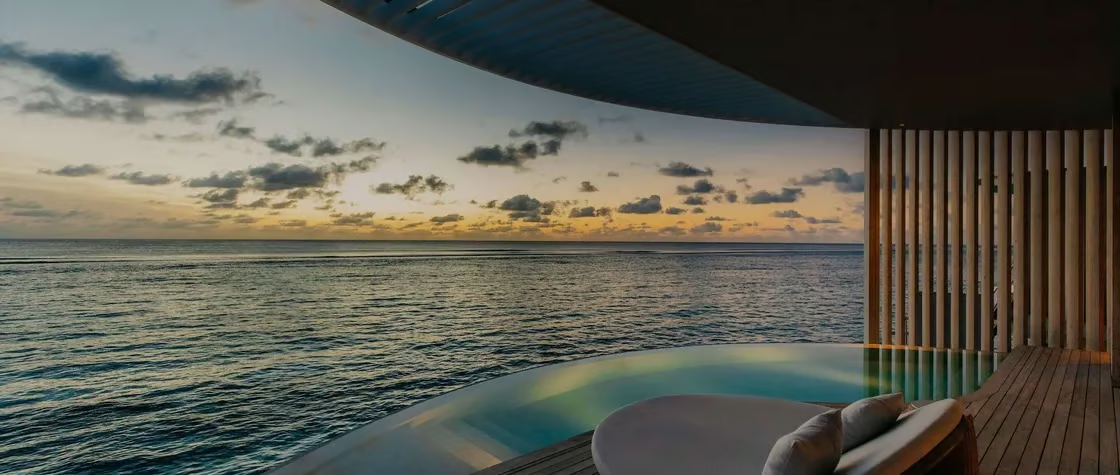
A long horizontal roof exaggerates the horizon beyond it.
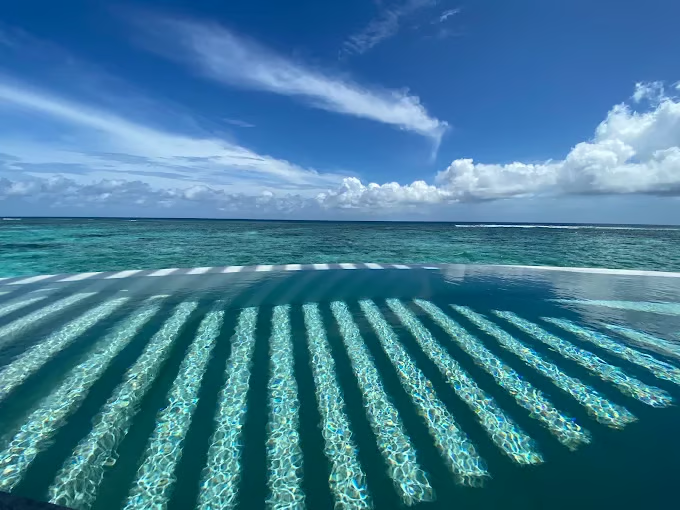
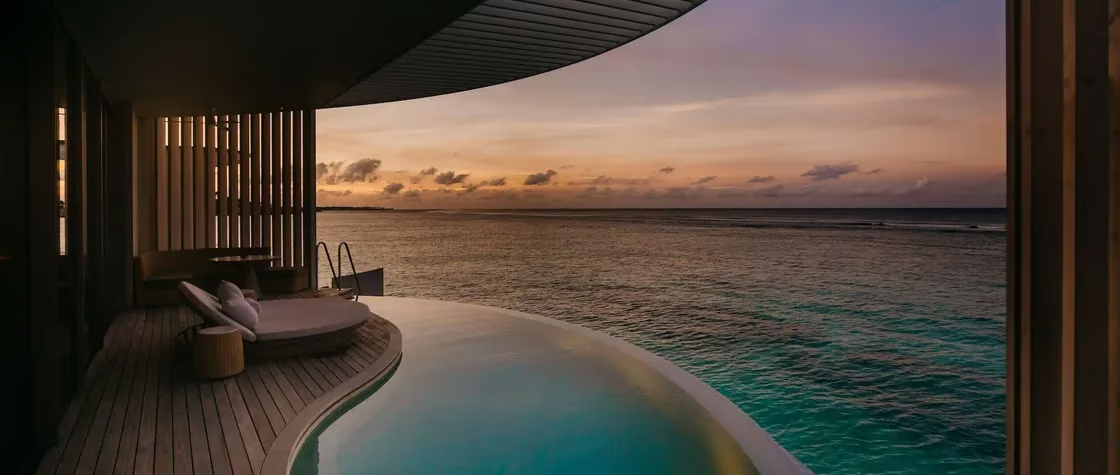
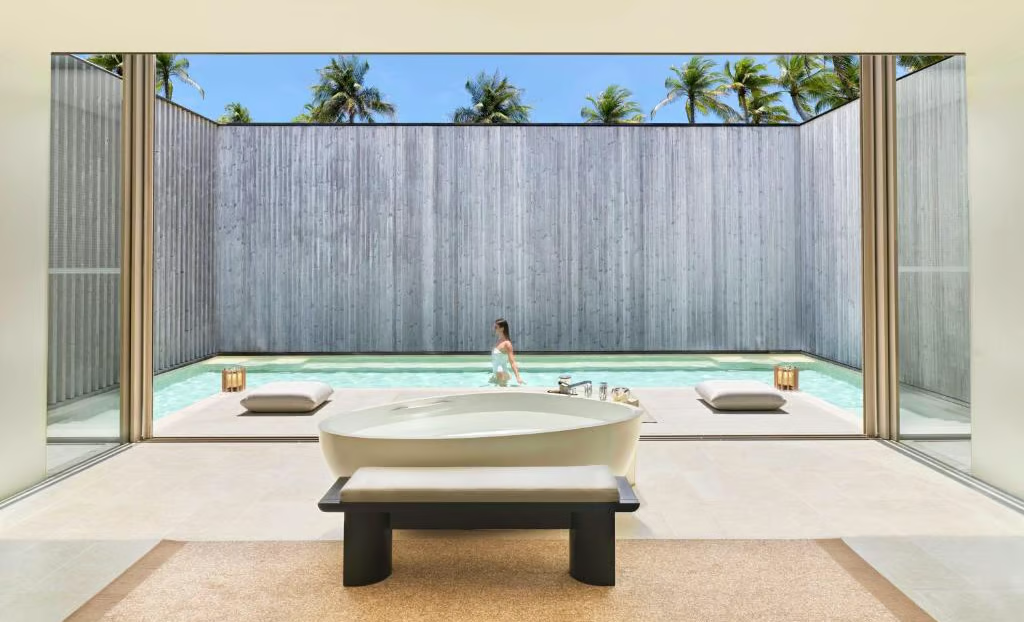
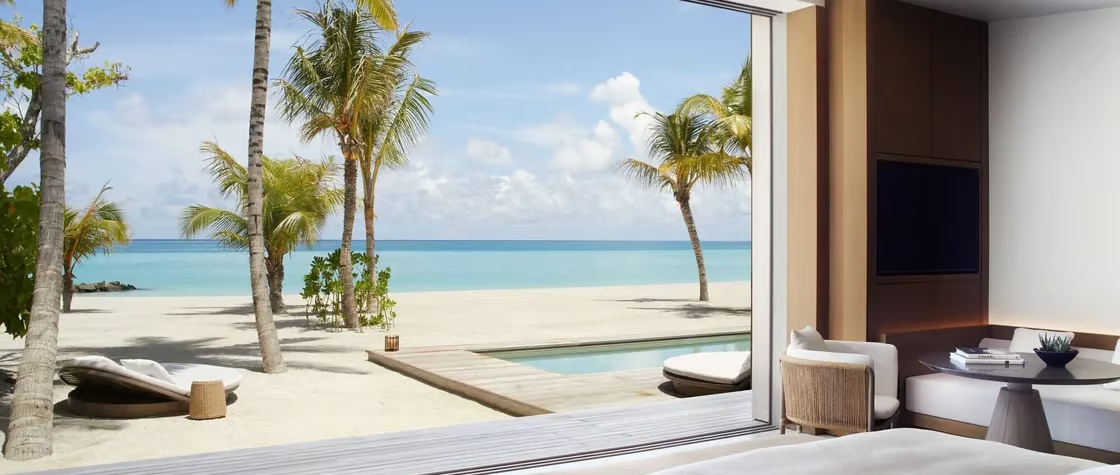
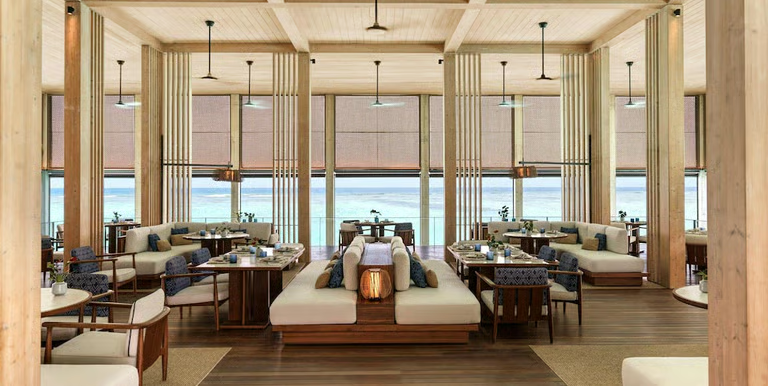
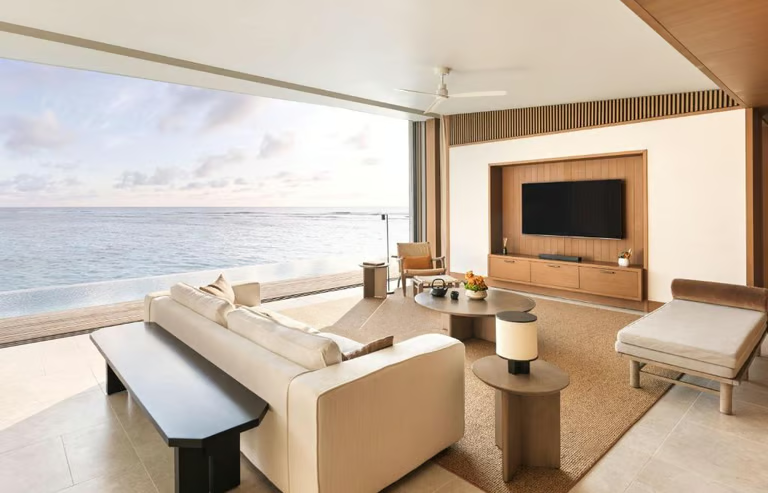
An opening frames water until the Indian Ocean momentarily resembles part of the interior.
This is where Kerry Hill's architecture becomes more interesting than its aerial photographs suggest.
The geometry is not simply there to be admired.
It organizes the act of looking.
And in a place as visually overwhelming as the Maldives, that may be architecture's most sophisticated role.
Not to compete with paradise.
To edit it.
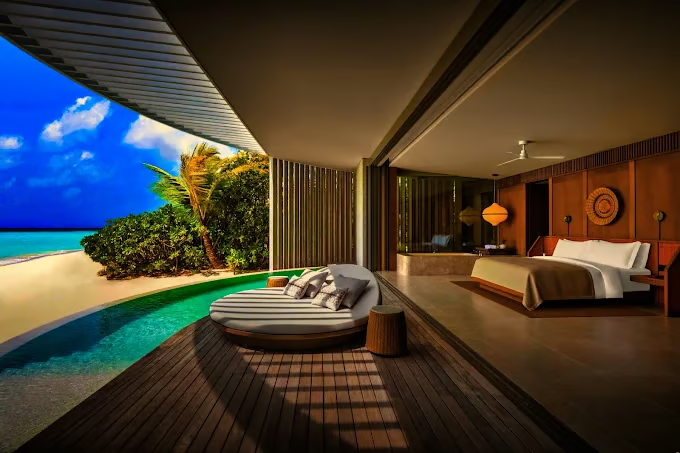
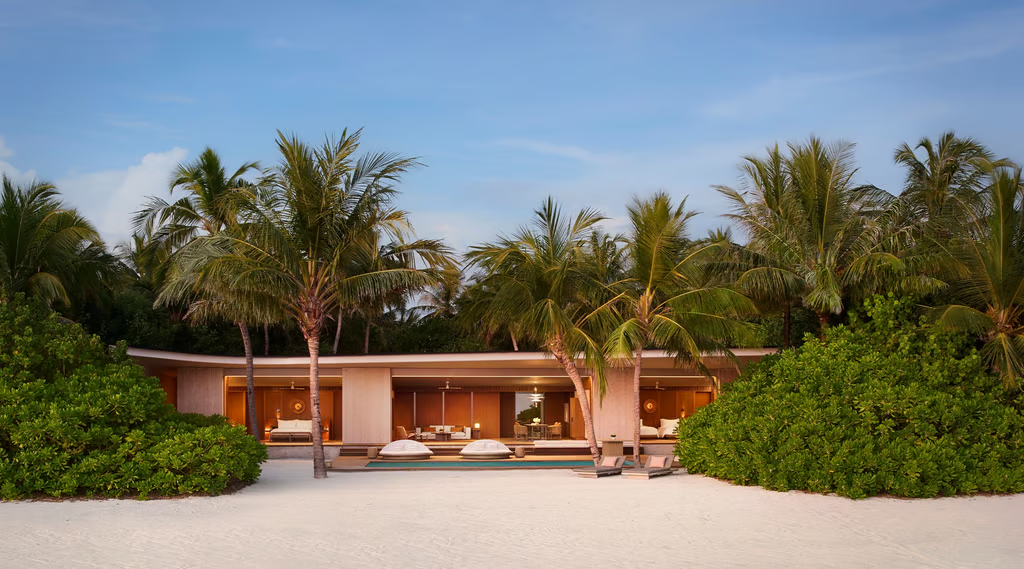
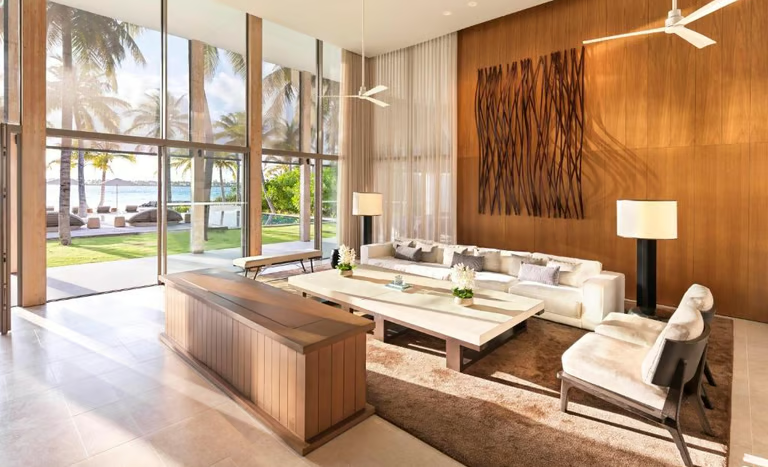
The villas follow the same principle. Their lines remain low and controlled, allowing water and sky to occupy most of the visual field. Natural materials and restrained interiors create warmth without demanding attention, while generous openings gradually dissolve the distinction between shelter and landscape.
Inside, there is design.
Outside, infinity.
Between them, remarkably little.
Perhaps that is why the circle feels so appropriate here.
A circle has no privileged direction.
It does not point toward a destination.
It turns continuously back toward itself.
Surrounded by an ocean whose horizon seems equally endless in every direction, the form begins to feel less imposed than discovered.
And suddenly our title becomes almost literal.
Somewhere in the Indian Ocean, Kerry Hill took one of architecture's oldest forms—
and drew a circle on the horizon.


Living Inside the Line
Great architecture does not end when we walk through the door.
It changes scale.
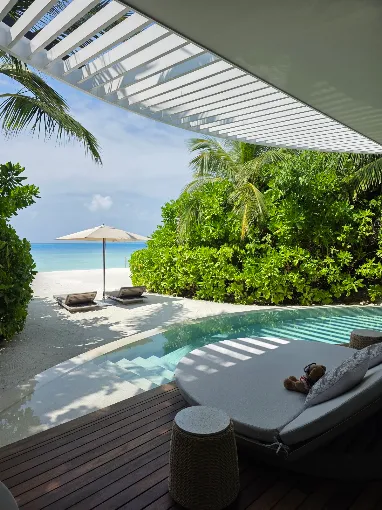
What appeared from above as geometry becomes, from within, a sequence of sensations: shadow, texture, proportion, temperature, light.
At The Ritz-Carlton Maldives, the most compelling interiors are not those that ask to be admired independently from their surroundings.
They are those that make the boundary between architecture and landscape increasingly difficult to locate.
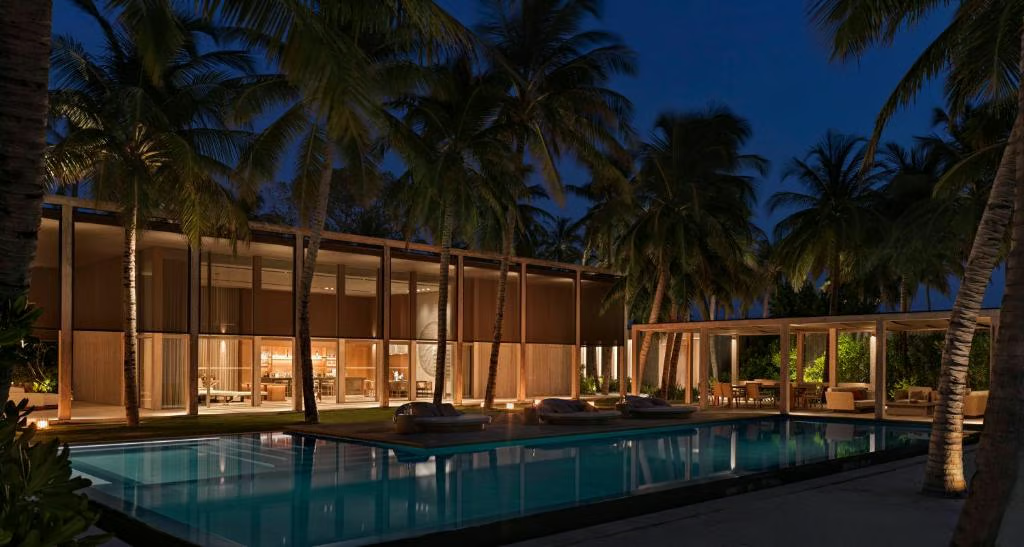
Glass opens toward water.
Roofs extend outward.
Terraces become rooms without walls.
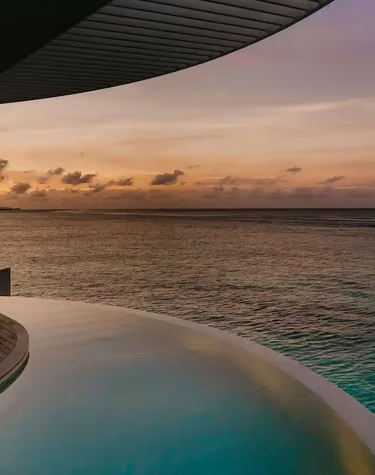
Pools visually merge with the lagoon.
And throughout the day, sunlight becomes another material — moving across timber, stone and fabric, changing the atmosphere without moving a single object.
This is where Kerry Hill's restraint becomes particularly powerful.
There is luxury, certainly.
But it rarely depends on decoration for its authority.
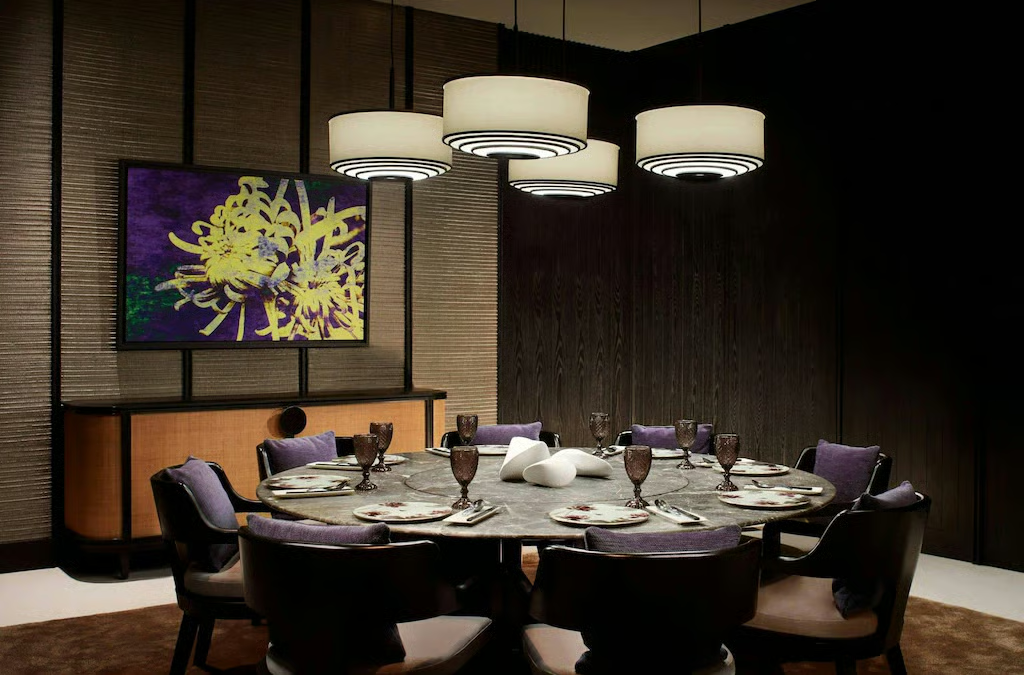
Natural materials bring warmth to the disciplined architecture. Timber softens geometry. Stone adds weight. Textiles introduce tactility. Furniture remains controlled enough to allow the larger composition to breathe.
Nothing needs to compete with the extraordinary blue outside.
Because here, the view is not an accessory to the interior.
It is one of its materials.
That distinction changes the experience of the villas.
The traditional hotel room is fundamentally protective: four walls separating the traveler from an unfamiliar environment.
In the Maldives, the architecture can afford to become more porous.
A bedroom faces the sea.
A bathroom opens toward sky.
A terrace extends the living space toward water.
Doors disappear and suddenly privacy does not mean enclosure.
It means having enough space around you that enclosure becomes unnecessary.
The Architecture of Light
Then the sun begins moving.
And the building changes with it.
Morning gives the architecture clarity. Lines become precise. Water reflects light onto ceilings and walls. Materials reveal their textures.
By afternoon, shadows lengthen.
The geometry softens.
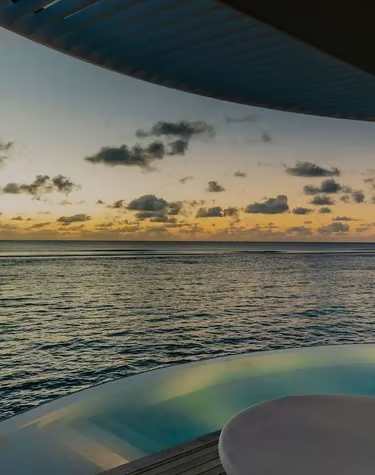
At sunset, the entire resort enters another visual register as warm light meets the cool horizontality of the Indian Ocean.
This is architecture that depends upon time.
The same wall is never quite the same wall.
The same opening never frames exactly the same sea.
And perhaps this is why an apparently simple vocabulary of circles and horizontal lines can sustain attention.
The architecture provides order.
Nature provides variation.
Even the resort's most dramatic circular gestures ultimately work because something uncontrollable is constantly passing through them — sunlight, clouds, wind, reflections, people.
The circle may be perfect.
The experience never is.
And that imperfection gives the design life.
Luxury Without Visual Noise
There is an interesting temptation in destinations as expensive and extraordinary as the Maldives.
Luxury can easily become accumulation.
More marble.
More objects.
More spectacle.
More evidence of how difficult the experience is to access.
Kerry Hill's architecture suggests another kind of confidence.
Remove what the place does not need.
When the ocean already occupies the horizon, perhaps a room does not need to perform.
When sunset provides the evening's most extravagant color, perhaps decoration can become quieter.
When water surrounds the architecture, perhaps the greatest gesture is simply creating the right place from which to see it.
This does not make the experience austere.
It makes it precise.
The pleasure comes from proportion.
From material.
From silence between objects.
From the feeling that architecture has considered where the body will sit, where the eye will travel and where the horizon should appear.
And slowly, something curious happens.
The circles and lines that seemed so important when we first encountered the resort begin to disappear from consciousness.
We stop analyzing the design.
We simply inhabit it.
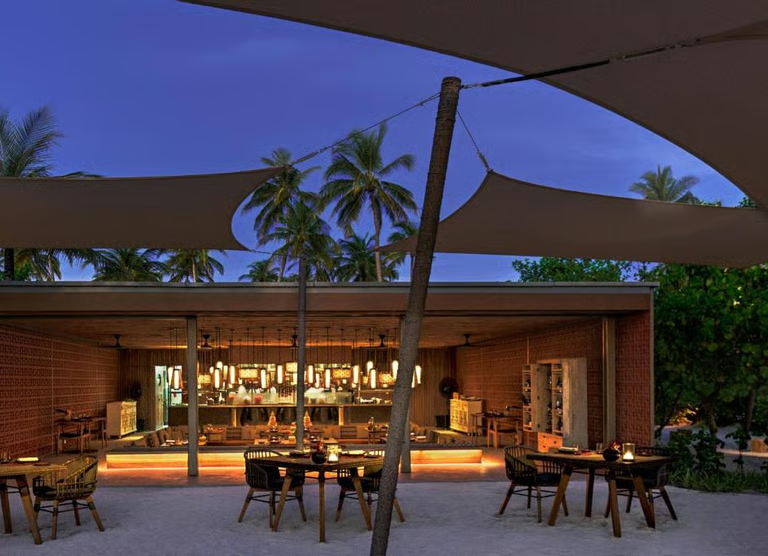
A chair becomes somewhere to watch the water.
A terrace becomes somewhere to spend an afternoon.
A framed view becomes the actual sky.
The architecture has done its work.
And perhaps that is the paradox of truly successful design:
the more carefully it has been considered, the less we need to think about it while living inside it.






When Architecture Disappears
The greatest compliment we can pay architecture in a landscape like this may sound almost contradictory.
Eventually, we stop seeing it.
Not because it lacks character.
Because it has succeeded in directing our attention elsewhere.
Toward the water.
Toward the changing sky.
Toward the horizon.
Toward the simple pleasure of occupying a beautiful place without constantly being reminded of the building that made the experience possible.
At The Ritz-Carlton Maldives, this gradual disappearance feels particularly appropriate.
The circles remain.
The long horizontal lines remain.
The villas still extend across the lagoon with extraordinary precision.
But after a while, geometry becomes background.
Life enters the drawing.
Someone swims.
Someone walks barefoot across a terrace.
A paddleboard moves slowly over transparent water.
Lunch stretches longer than expected.
A door remains open because there seems little reason to close it.
And the architecture begins to fulfill a purpose considerably more important than being photographed.
It becomes somewhere to live.
The Horizon Takes Over
The Maldives have a peculiar way of simplifying the visual world.
There are moments when almost everything can be reduced to three elements:
water, sky and the line separating them.
That apparent simplicity is deceptive.
The colors change constantly.
Clouds alter scale.
Wind transforms the surface of the lagoon.
Morning produces one ocean; evening produces another.
Against this continuous variation, Kerry Hill's architecture provides something stable.
A frame.
A proportion.
A place from which to watch.
Perhaps this is why the resort's geometry feels so satisfying.
Human beings have always used architecture to create order within landscapes larger than ourselves.
We draw lines.
We establish boundaries.
We make circles.
We create rooms.
For a moment, infinity becomes comprehensible.
But the illusion never lasts.
The tide moves.
The light changes.
The horizon remains beyond reach.
And nature quietly reminds architecture of its limits.
There is something elegant about a building that accepts this.
It does not need to dominate the landscape to have presence.
It can participate.
A Circle Left on the Water
Kerry Hill died before the resort opened, giving the project an additional poignancy.
Architecture has always contained this strange relationship with time: a person imagines something that may continue to shape the experiences of strangers long after the drawing has left the table.
Here, that legacy is unusually clear.
A line conceived in a studio becomes a wall beside the Indian Ocean.
A curve becomes a room.
A circle becomes a place where people gather, swim, eat, rest and watch the sun disappear.
The abstraction acquires life.
And perhaps that is what makes Drawing a Circle on the Horizon more than a description of form.
The circle is architecture's contribution.
The horizon belongs to something much larger.
One can be designed.
The other can only be witnessed.
Eventually evening arrives.
The hard lines of the day soften.
Water and sky begin sharing the same colors.
Buildings lose detail and become silhouettes.
Lights appear.
The geometry that seemed so precise beneath the sun becomes increasingly difficult to distinguish from its reflection.
And for a few minutes, architecture, water and horizon seem to occupy the same plane.
Then darkness removes the drawing almost completely.
The Indian Ocean remains.
Tomorrow morning, light will reveal the circles again.
But tonight, perhaps the most beautiful thing about the architecture is that it knows when to disappear—
and leave us alone with the horizon.








Contact
Contact us for partnerships, collabs, and any questions.
phone number
+1 561 601 2069
© 2025. All rights reserved.