THE NEW LUXURY IS A SENSE OF PLACE


LUXURY, SOMEWHERE
For decades, luxury was often defined by distance: from noise, from crowds, from ordinary life. The most desirable places seemed to exist in their own perfect worlds — carefully designed environments where comfort was measured, in part, by how completely the outside world could disappear.
Something is changing.
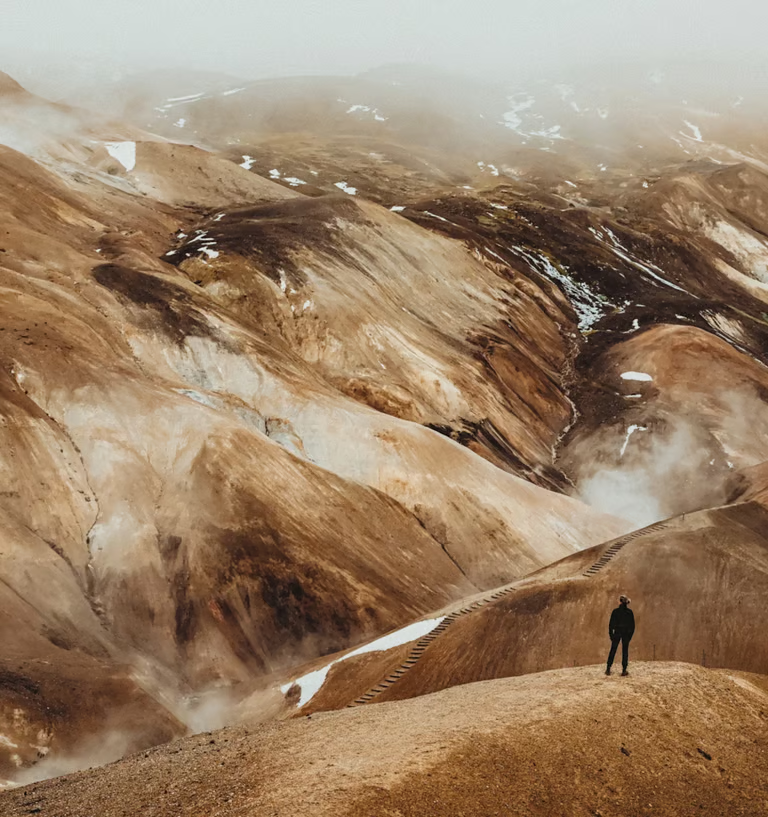
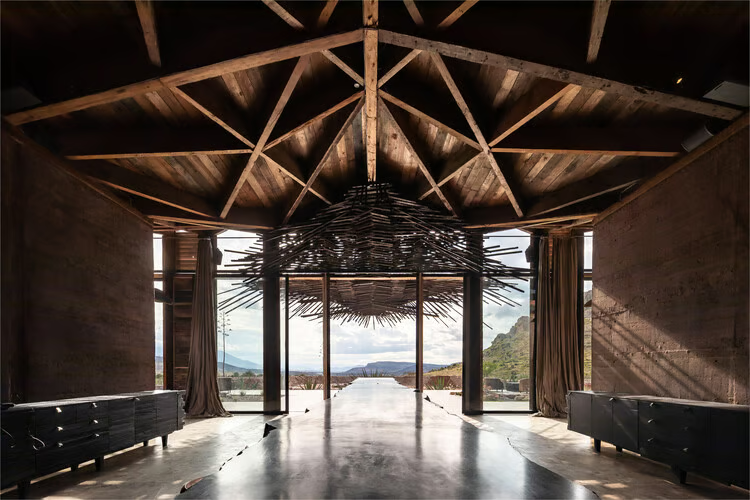
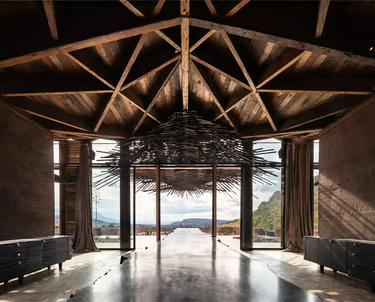
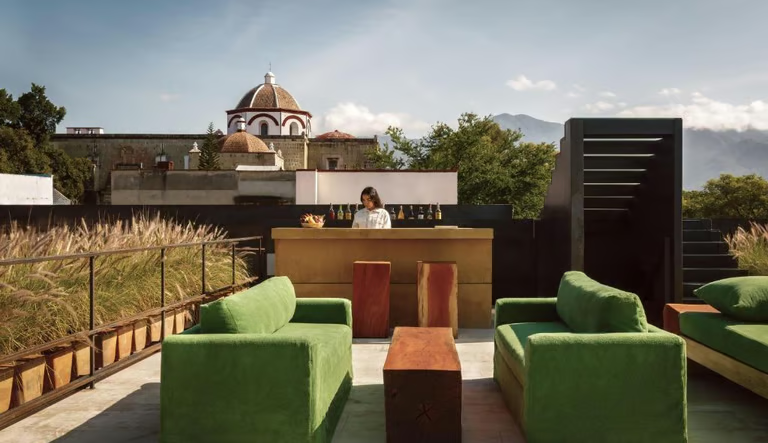
Today, some of the most compelling destinations are doing almost the opposite. Instead of protecting us from where we are, they bring us closer to it. Architecture responds to climate and geography. Materials come from the surrounding landscape. Local craft enters the interiors. Food begins with what grows nearby. Even silence, light and the passing of the day become part of the experience.
This changes the meaning of luxury itself. A hotel no longer needs to impose an idea of perfection upon a place. It can begin by observing what is already there — and allowing the destination to shape the experience.
A beautiful room can exist almost anywhere.
A true sense of place cannot.
It is the difference between waking up in a remarkable hotel and waking up knowing, instinctively, exactly where in the world you are.
Perhaps this is one of the most interesting shifts in contemporary luxury: the realization that exclusivity is not always about escaping the world.
Sometimes, the greatest privilege is being allowed to enter it more deeply.





WHAT A PLACE REMEMBERS
A sense of place is not created by architecture alone.
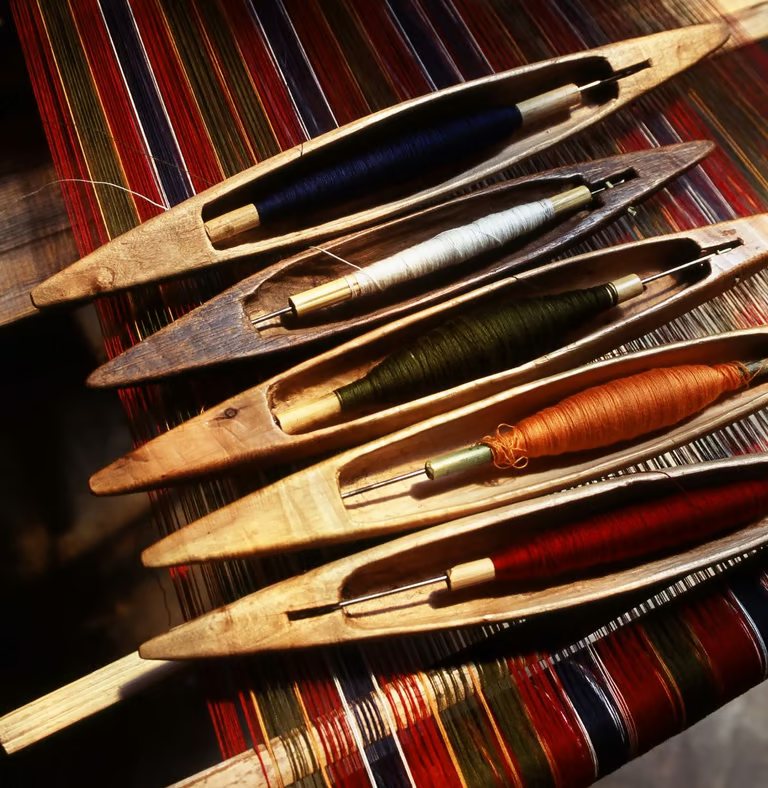
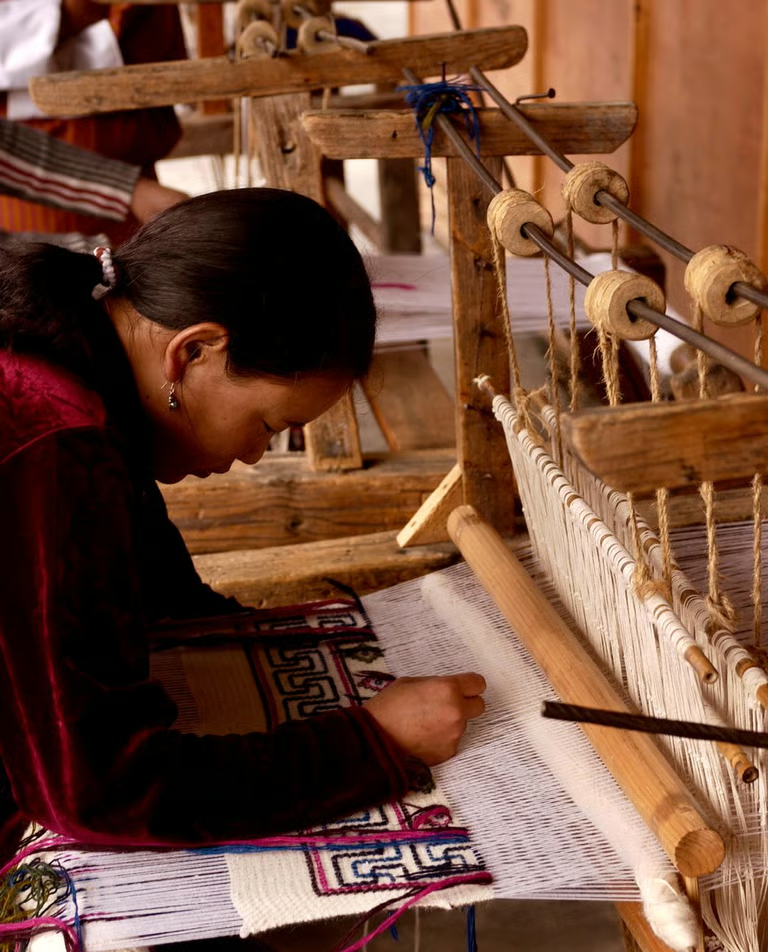
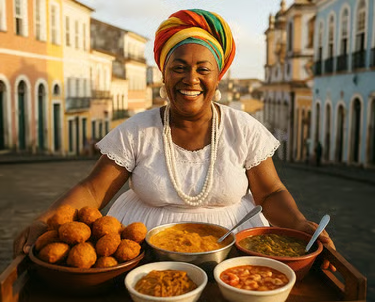
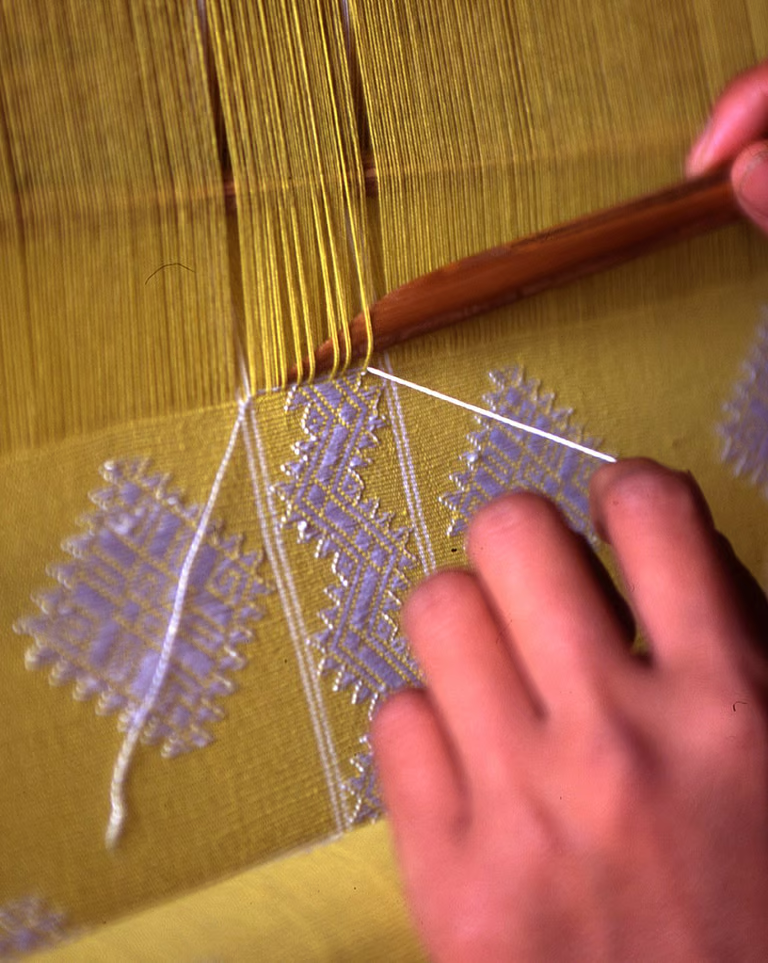
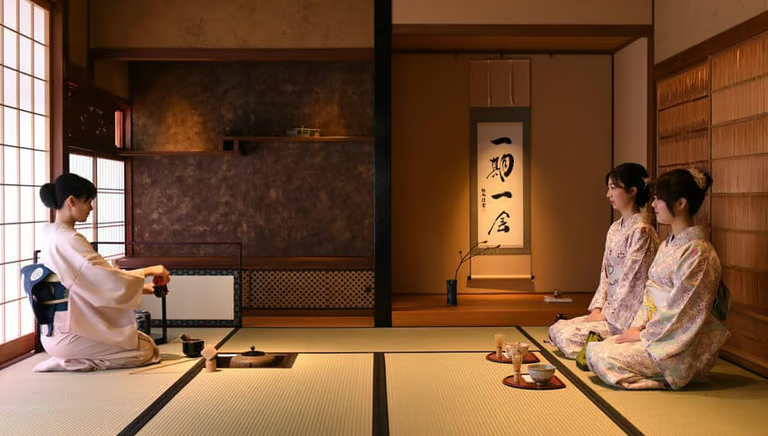
Long before a hotel arrives, a place already has its own vocabulary. It lives in the way clay is shaped, bread is baked, fabric is woven, wood is carved, spices are combined, tables are set and ceremonies are repeated. These gestures may appear small, but together they form something architecture can never manufacture: cultural memory.
The most thoughtful expressions of contemporary luxury have begun to understand this.
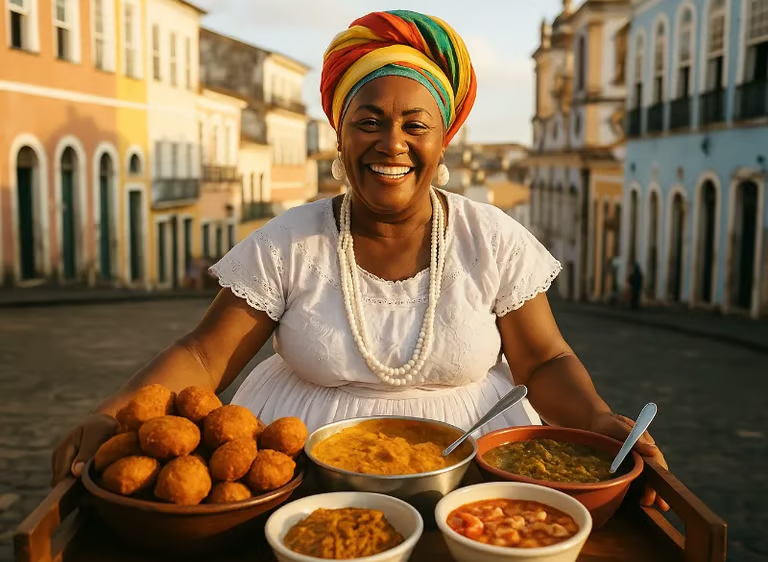
Instead of importing a complete idea of sophistication from somewhere else, they look closer. A basket woven according to a technique passed through generations. A ceramic vessel carrying the irregular marks of the hand that made it. A recipe that belongs not to a chef, but to a family. A textile whose colors, patterns and imperfections reveal the landscape and culture from which it came.
Suddenly, objects are no longer decoration. Food is no longer simply gastronomy. Craft is no longer an accessory to the interior.
They become storytellers.
And perhaps this is where luxury becomes most interesting — when something cannot simply be ordered, reproduced or transported without losing part of its meaning.
There is also something deeply contemporary in this return to the particular. We live surrounded by things designed to look identical everywhere. The same brands, the same materials, the same visual references can travel from one continent to another with extraordinary ease. Against that sameness, the imperfect, the handmade and the inherited acquire a different kind of value.
Not because they are nostalgic.
Because they belong.
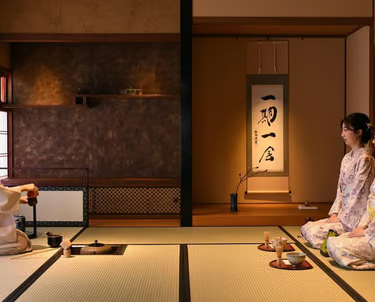
A meal can carry the memory of a landscape. A piece of cloth can preserve a language of symbols. A ritual can connect a visitor, briefly and respectfully, to something that existed long before their arrival and will continue long after they leave.
This does not mean turning culture into spectacle. Quite the opposite. The most meaningful experiences are often the quietest ones — moments when local knowledge is allowed to remain itself rather than being redesigned for an international audience.
Perhaps that is why memory may be one of luxury’s rarest materials.
It cannot be manufactured on demand.
It can only be inherited, preserved — and shared.



THE LUXURY OF BELONGING
Perhaps the most profound luxury a place can offer is not privacy, service or even beauty.
It is participation.
For a long time, travel was built around the idea of observation. We arrived somewhere extraordinary, looked at it, photographed it, admired it — and eventually returned home. The destination remained outside us, something beautiful to be consumed from a distance.
But the places we remember most rarely work that way.
They invite us into their rhythm.
We begin to notice when the light changes. We recognize the smell of wood after rain, the sound of a market opening in the morning, the ingredients that return to the table each day. We learn that certain objects have names, that certain gestures have histories, that a landscape is not empty simply because it is quiet.
Gradually, the destination stops behaving like scenery.
It becomes a world.
This may also explain why the most meaningful form of hospitality is increasingly less about providing everything and more about creating the conditions for discovery. The role of a remarkable hotel is not necessarily to place itself between the guest and the destination, but sometimes to disappear just enough for the destination to come forward.
A door opens onto a village.
A meal introduces a landscape.
A conversation reveals a tradition.
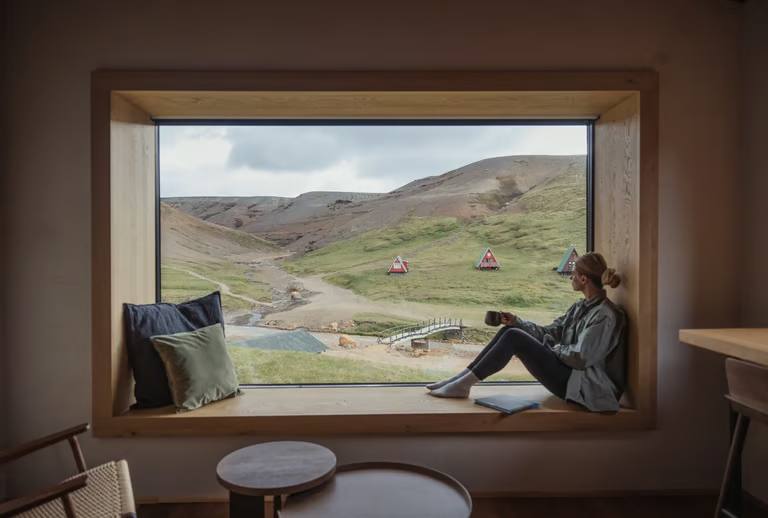
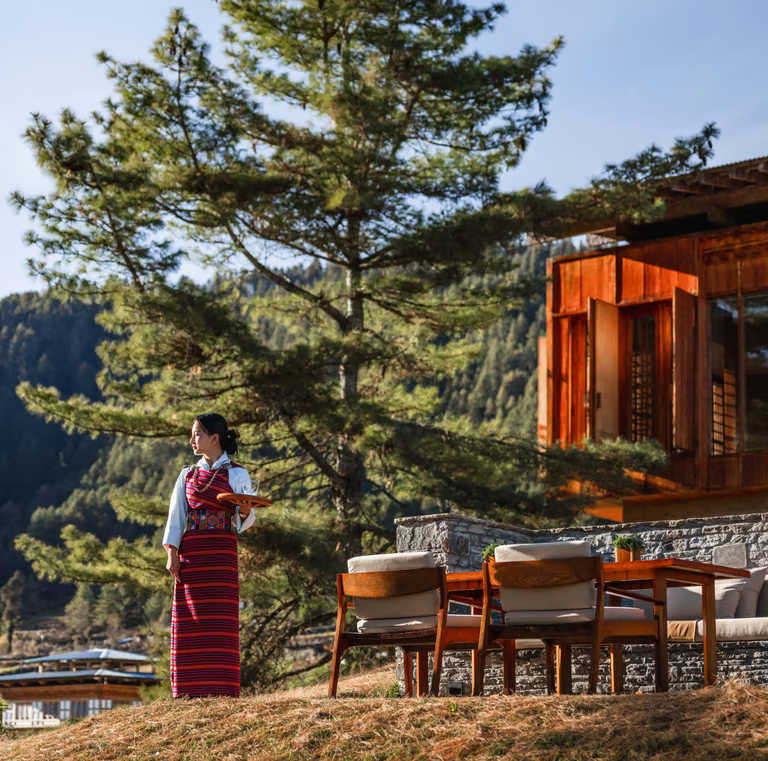
A room frames a mountain that has shaped life around it for centuries.
None of these experiences needs to be spectacular in the conventional sense. Their value comes from something more difficult to reproduce: specificity.
Because true belonging cannot be standardized.
It cannot be franchised, copied or shipped across continents. It emerges slowly from relationships between people, landscape, architecture, food, craft, climate and memory — all the things that make one corner of the world irreducibly different from another.
Perhaps this is why our idea of luxury is changing.
After decades of traveling in search of places designed to make us feel that we could be anywhere, we may finally be rediscovering the pleasure of being somewhere.
And knowing exactly where we are.
The new luxury is a sense of place.




Contact
Contact us for partnerships, collabs, and any questions.
phone number
+1 561 601 2069
© 2025. All rights reserved.