
AMANVARI Between Desert and Sea


Between Two Elements
Some landscapes begin with abundance.
Baja California begins with absence.
Water becomes precious. Vegetation becomes sculptural. Shadows acquire weight. The earth seems stripped to its essentials — stone, sand, wind and an extraordinary quality of light.
And then there is the sea.
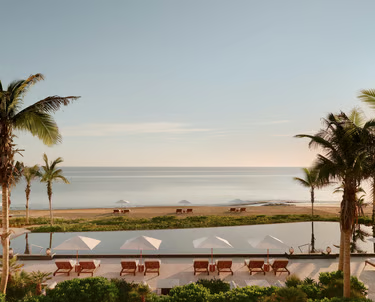
At the eastern edge of the Baja California peninsula, the desert reaches the Sea of Cortez with almost theatrical abruptness. Two apparently contradictory worlds occupy the same horizon: one dry, mineral and resistant; the other fluid, reflective and constantly moving.
Amanvari exists between them.
That position is more than geographical.
It provides the architecture with its vocabulary.
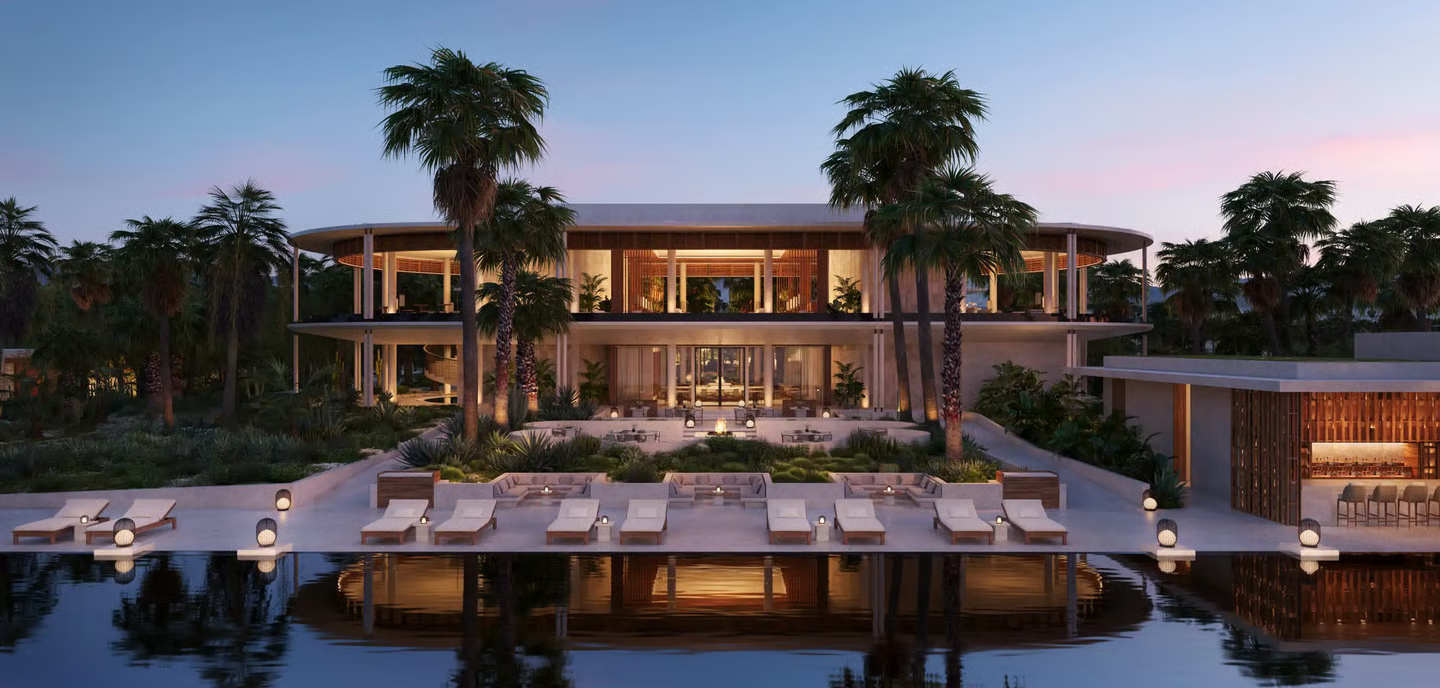
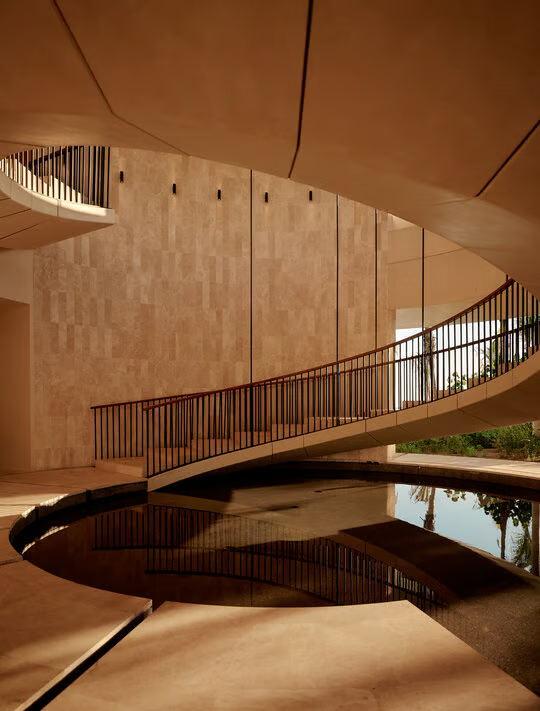
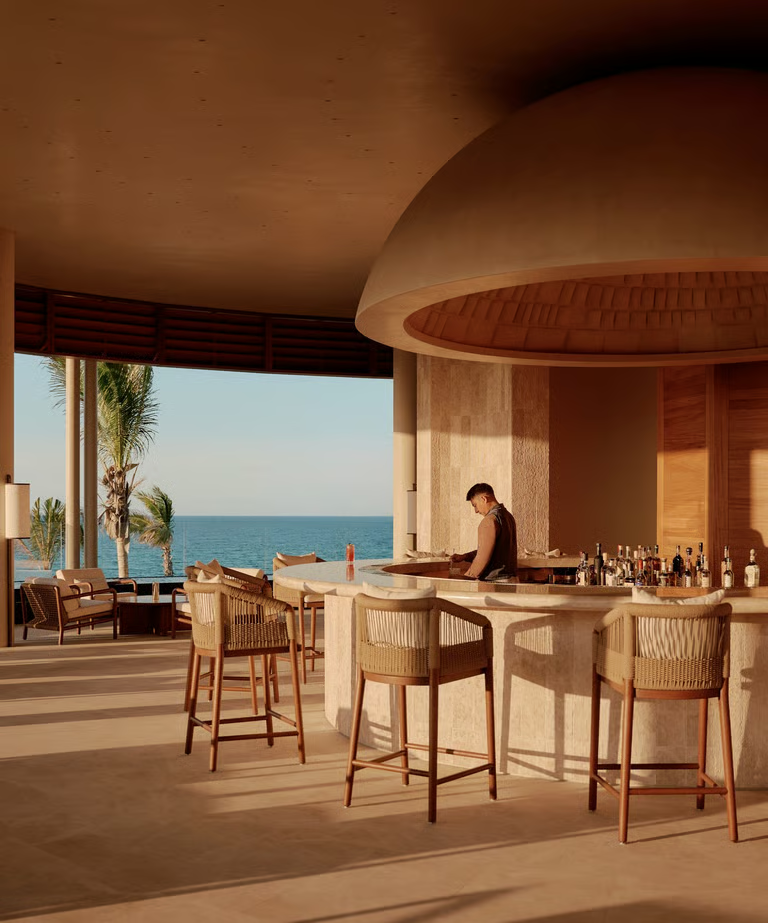
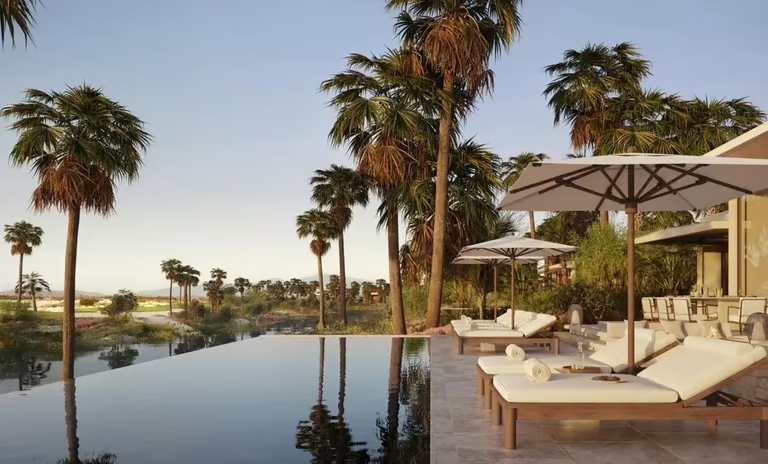
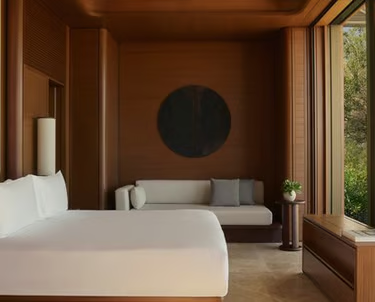
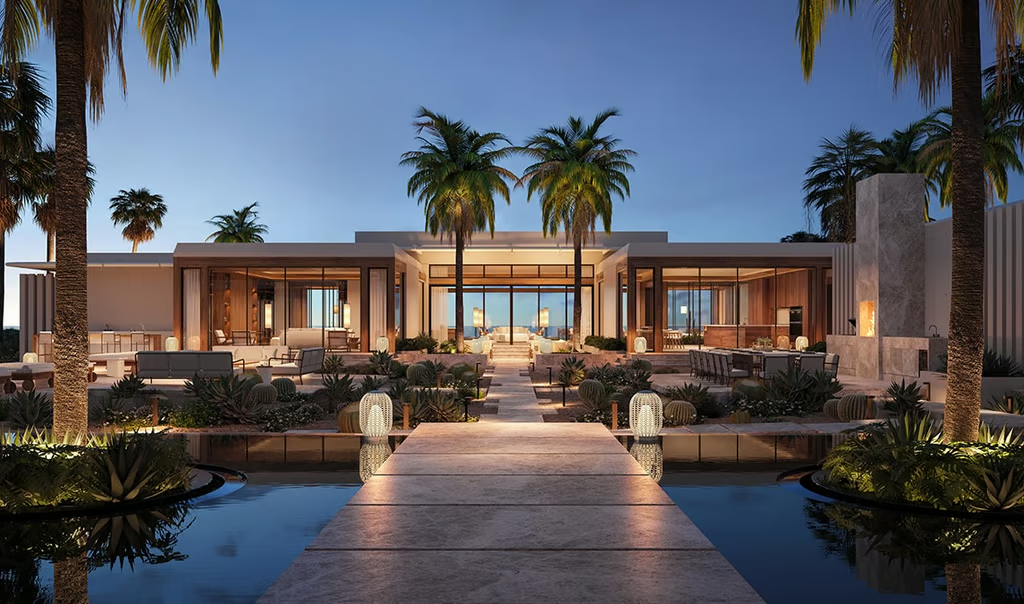
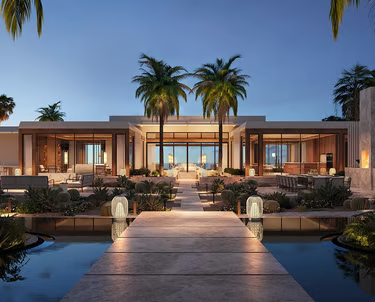
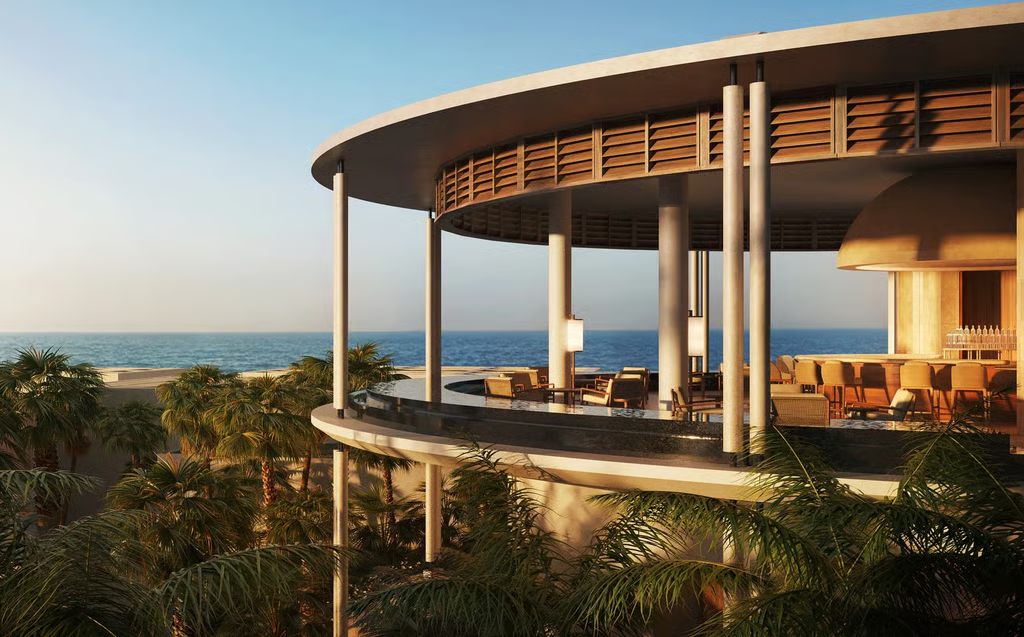
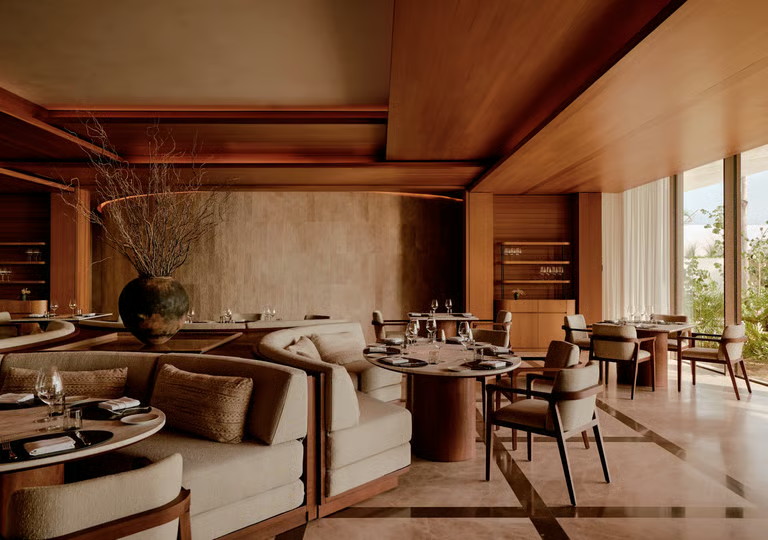
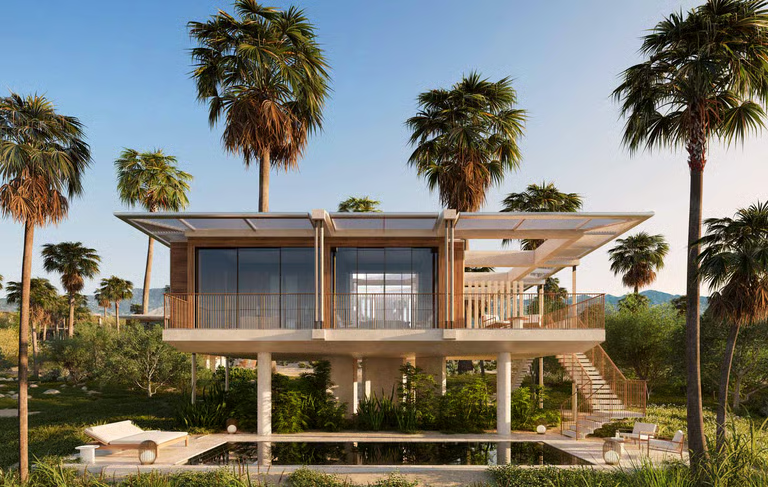
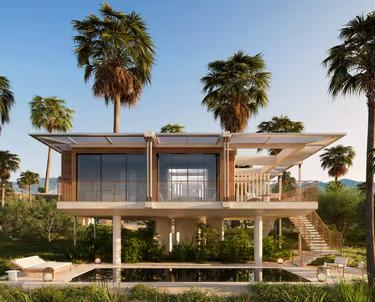
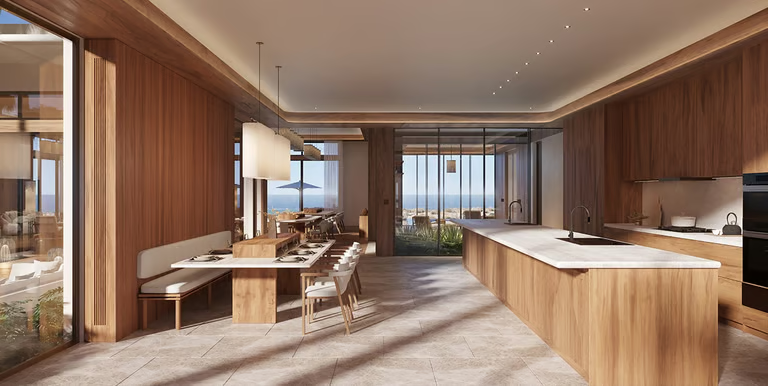
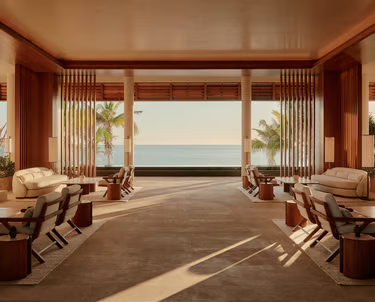
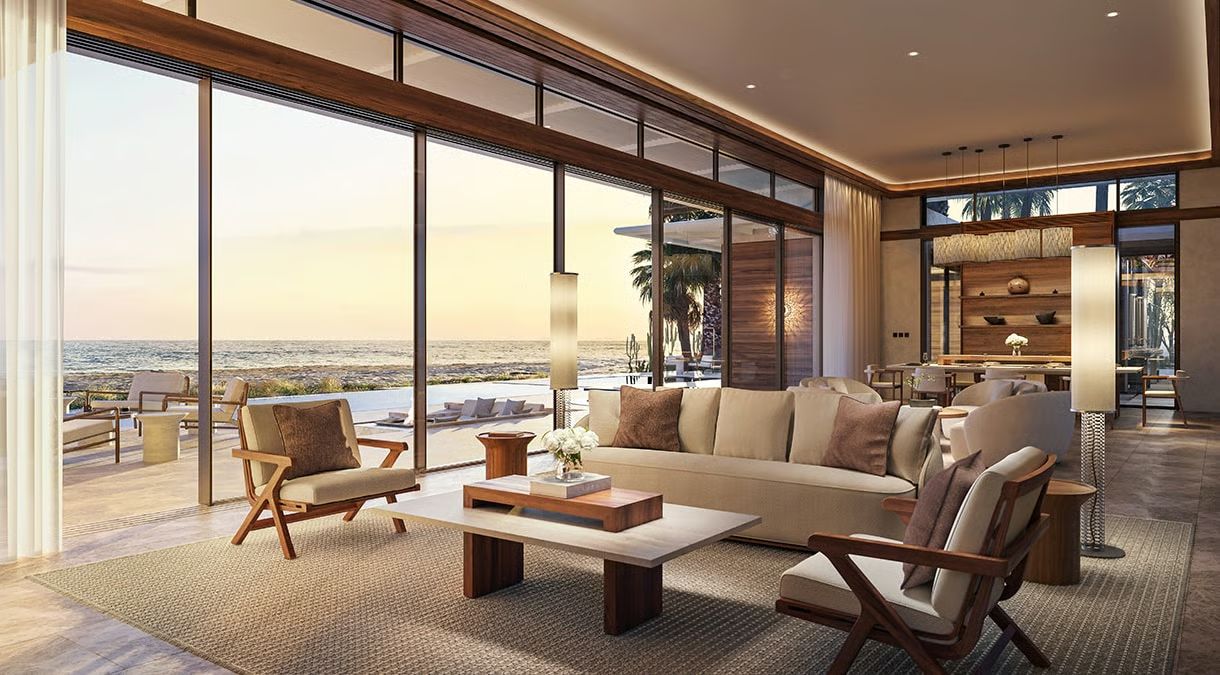
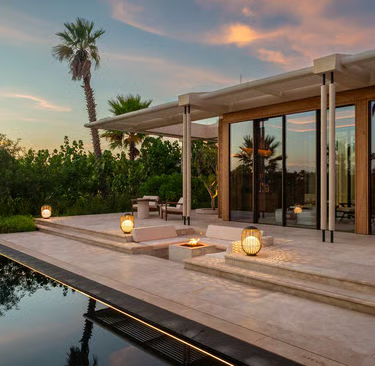
Rather than introducing an exotic object into the landscape, the resort appears to borrow from what is already there. Low volumes respond to the horizontality of the desert. Earthy tones echo the surrounding terrain. Stone, timber and tactile surfaces bring the palette of Baja into the interiors.
Nothing needs to announce Mexico with a decorative exclamation mark.
The sense of place comes through material.
Through texture.
Through craftsmanship.
Through light.
And, perhaps most importantly, through restraint.
Architecture That Belongs
Building beautifully in an extraordinary landscape is relatively easy.
Building without making the landscape seem secondary is much harder.
At Amanvari, architecture seems to understand that distinction.
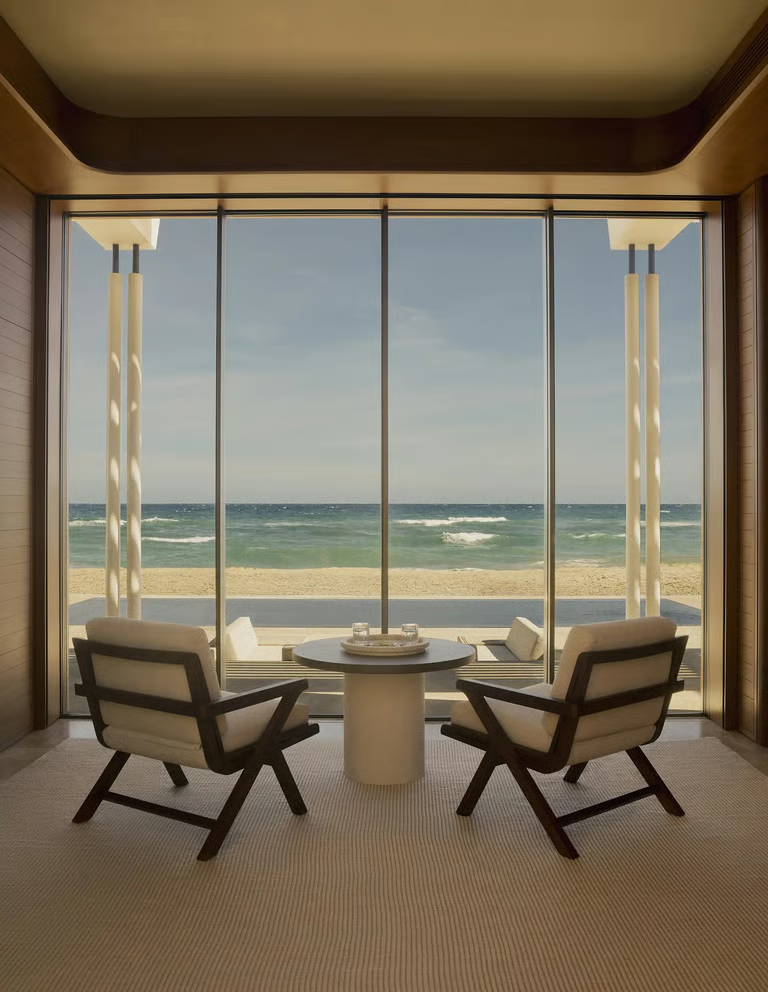
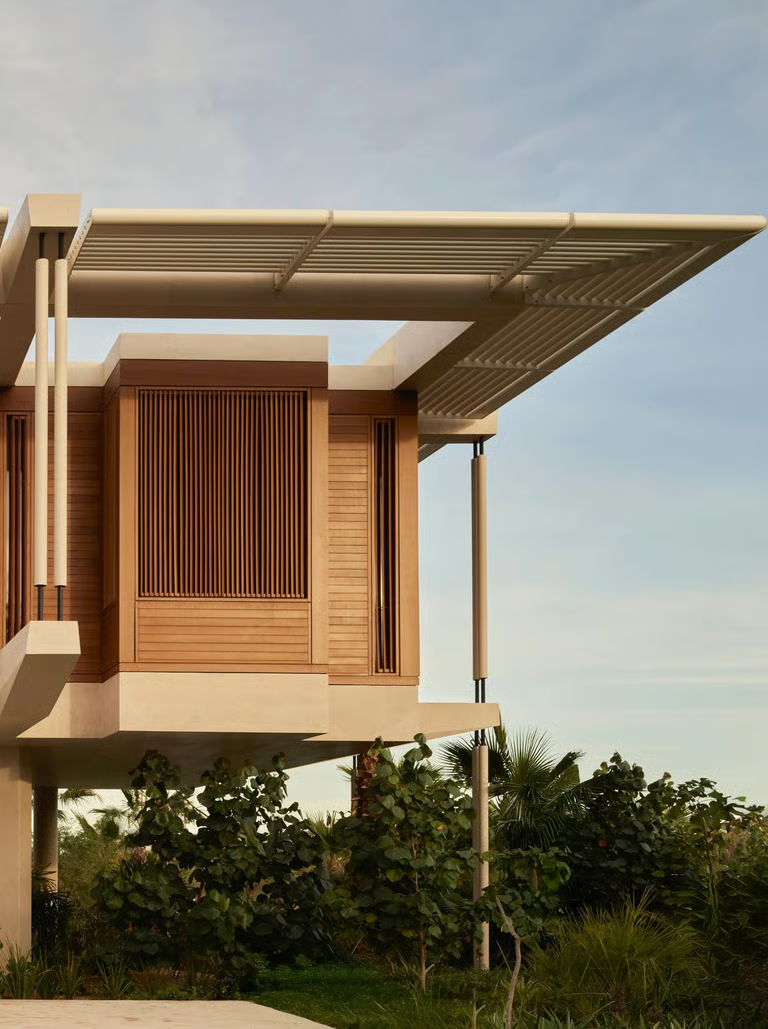
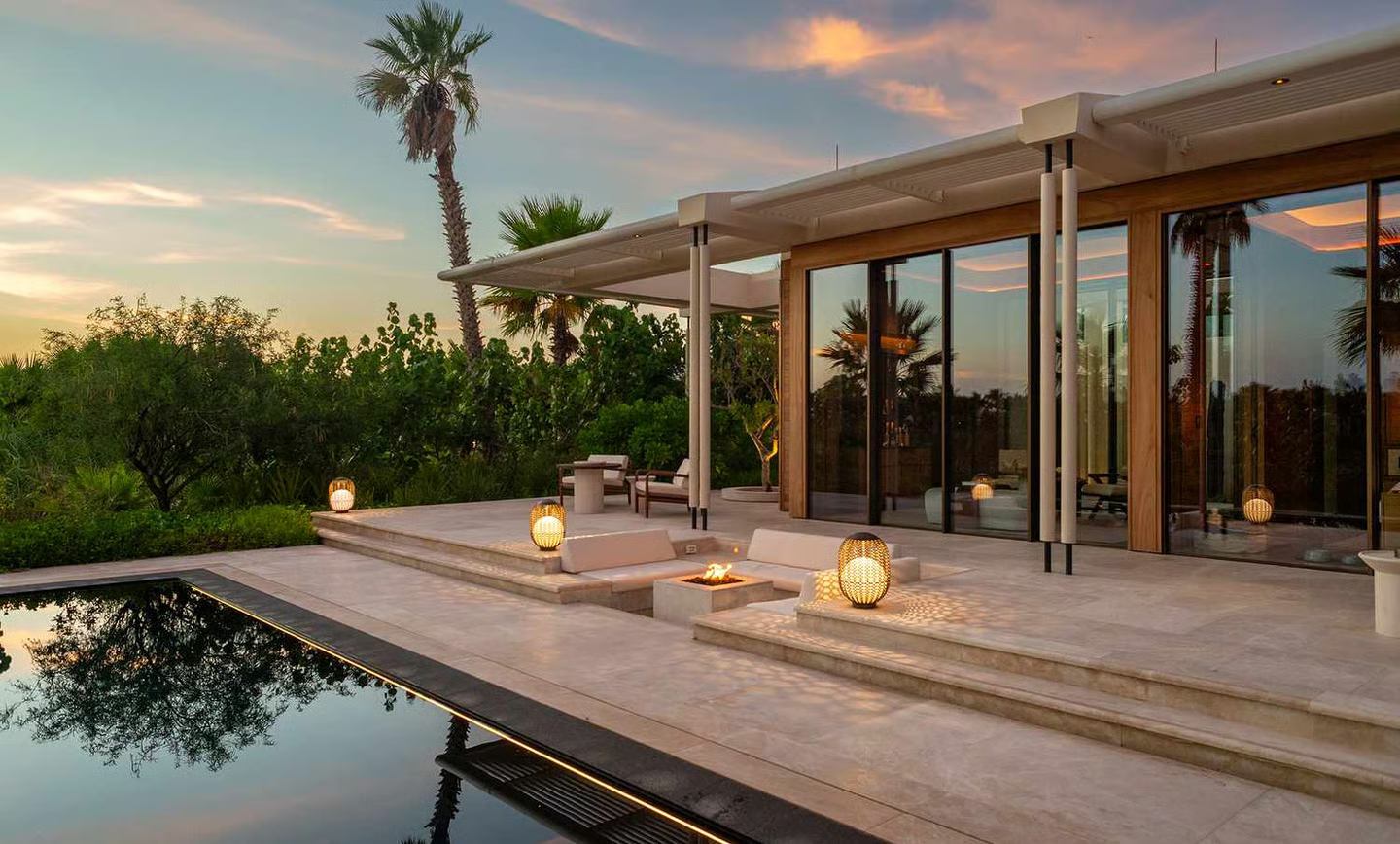
The structures remain close to the earth, creating long horizontal compositions rather than competing vertically with the vastness around them. Deep overhangs produce shade. Openings frame fragments of desert and sea. Courtyards and terraces create transitional spaces where the distinction between interior and exterior becomes deliberately uncertain.
This is not architecture trying to reproduce nature.
It is architecture learning how to belong beside it.
And belonging in Baja requires an understanding of light.
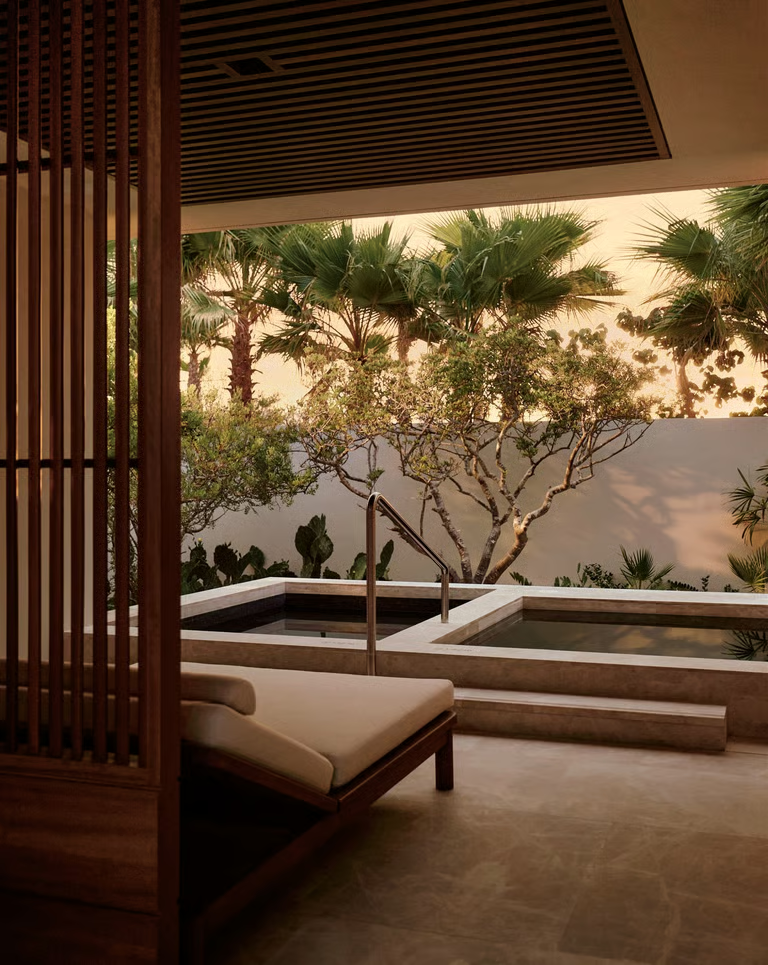
Under the intense Mexican sun, shade becomes architecture in its own right.
A roof is not merely a roof; it creates refuge.
A wall is not simply a boundary; it catches sunlight and reveals texture.
An opening does more than provide a view; it controls how much of an enormous landscape we receive at once.
The result is a curious balance between exposure and protection.
Outside, the scale is almost overwhelming.
Inside, everything becomes intimate again.
The Luxury of Material
There is another kind of richness here.
Not the richness of accumulation, but of touch.
The grain of timber.
The irregularity of stone.
The softness of woven textiles.
The evidence of a hand behind an object.
Mexican design has an extraordinary ability to make material feel emotional. Craft is rarely separated completely from function; an object can be useful and beautiful without needing to declare itself art.
Within Amanvari, that sensibility gives warmth to contemporary architecture that might otherwise become too pristine.
The interiors remain composed, but not sterile.
Minimal, but not anonymous.
Sophisticated, without becoming disconnected from the country in which they exist.
And that distinction matters.
Because international luxury can sometimes erase geography.
A beautiful room in Mexico begins to resemble a beautiful room in Japan, Greece or the Maldives.
Everything becomes impeccably neutral.
Everything travels.
Amanvari suggests the opposite possibility:
that sophistication can become more powerful when it stays somewhere.
Here, somewhere is Baja California.
A narrow peninsula suspended between desert and ocean.
A landscape where abundance and scarcity exist side by side.
And an architecture that begins not by asking what should be added—
but by noticing what was already there.
A Landscape Brought Inside
The most convincing interiors rarely feel imported.
They seem inevitable.
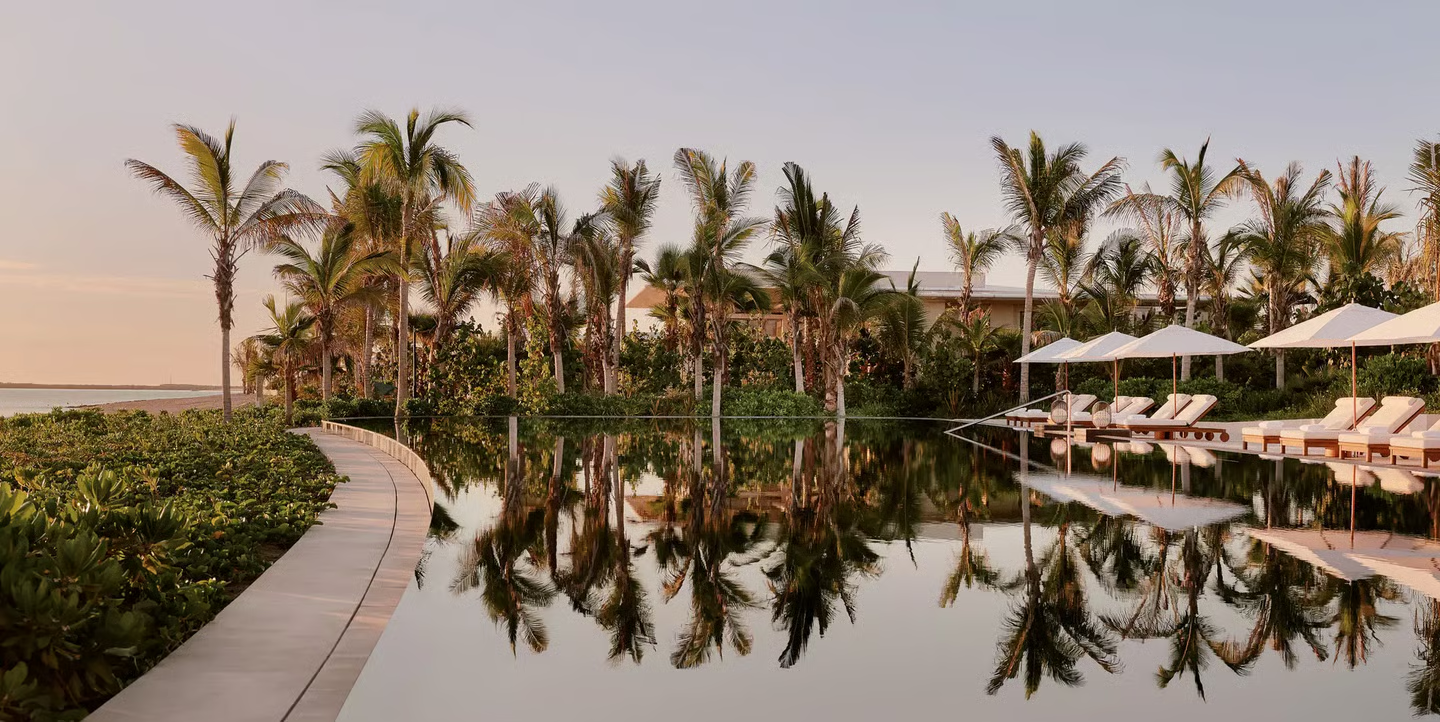
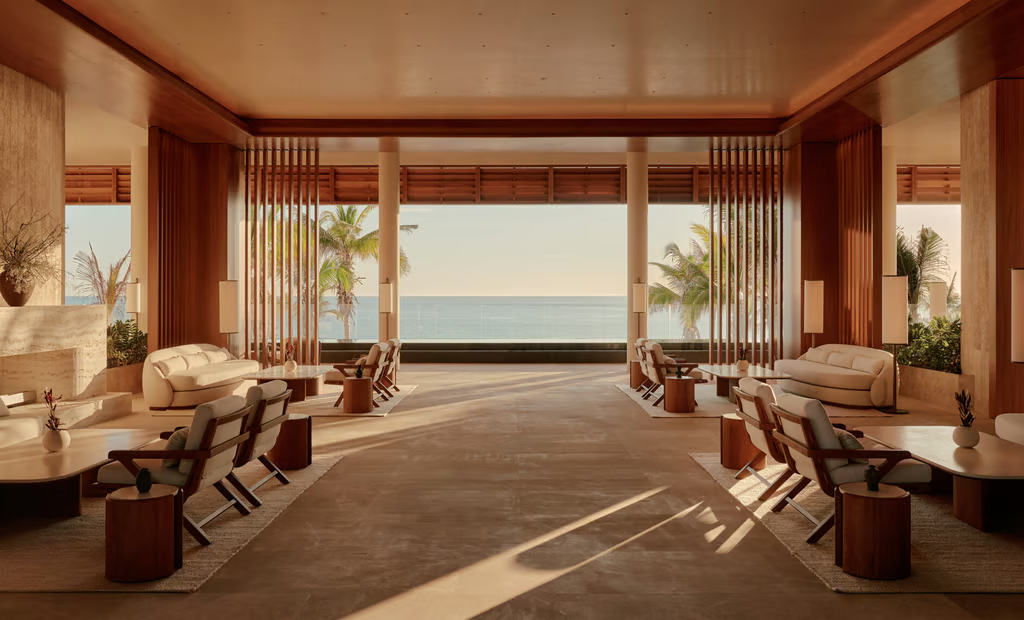
At Amanvari, the landscape does not stop at the threshold. It enters quietly — through color, material, shadow and the carefully controlled relationship between interior space and the world beyond it.
The palette belongs to the earth.
Sand.
Clay.
Stone.
Sun-bleached timber.
Natural fibers.
Against them, the blue of the Sea of Cortez becomes almost startling.
This is an important part of the design's intelligence. The interiors do not attempt to compete with the landscape through color or ornament. Instead, they create a neutral, tactile foreground against which nature becomes more intense.
A framed opening suddenly contains an impossible blue.
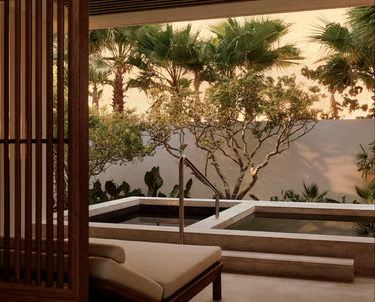
A terrace becomes an extension of the desert.
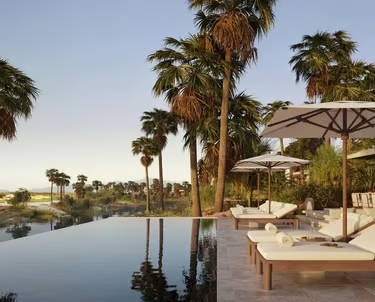
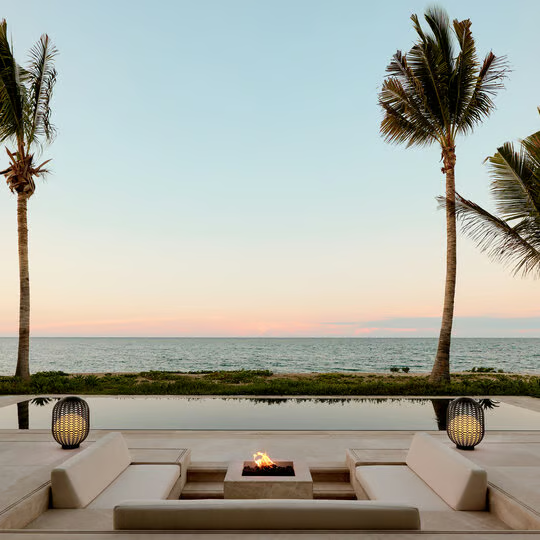
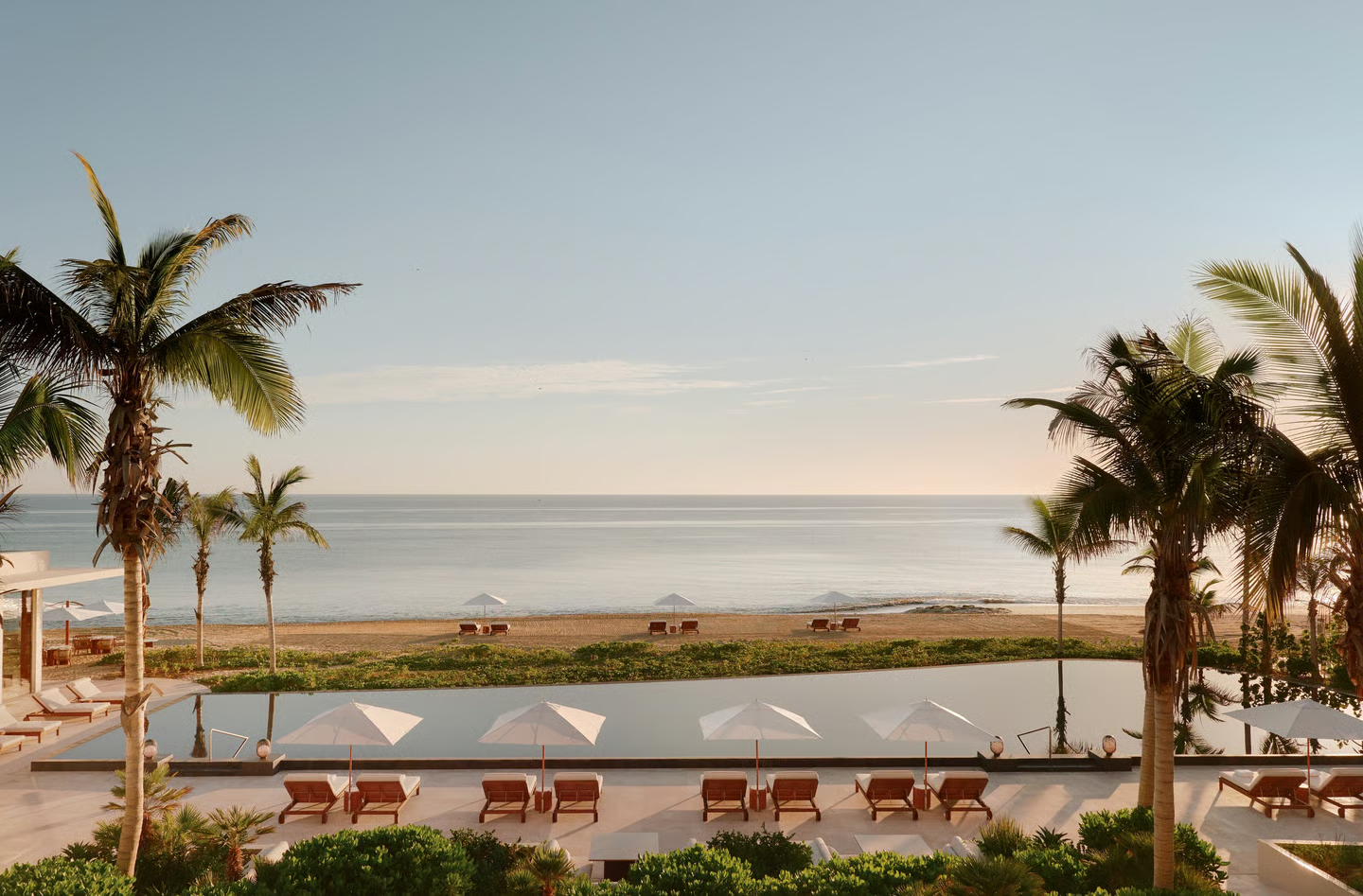
A pool catches the sky.
A shadow moves slowly across a textured wall.
The architecture does not merely provide views.
It choreographs them.
The Beauty of the Hand
Within this restraint, craft becomes essential.
Mexico possesses one of the richest material cultures in the world, where ceramics, weaving, woodwork, metal and stone carry traditions that long predate contemporary ideas of luxury.
The sophistication lies in allowing that heritage to appear without turning it into costume.
A woven surface can introduce warmth.
A ceramic object can carry irregularity into an otherwise controlled room.
A piece of furniture can reveal the intelligence of joinery and the trace of the hand that made it.
These details matter precisely because the architecture around them is so quiet.
There is room to notice.
And perhaps this is one of the great pleasures of material luxury: it asks to be experienced at close range.
A photograph can communicate proportion.
It can show a spectacular view.
But it cannot reproduce the temperature of stone beneath a hand, the roughness of a woven fiber or the way timber changes after years of sun and touch.
Some forms of beauty require proximity.
Living Between Desert and Sea
Then the architecture opens again.
This constant movement — shelter, exposure, shelter — defines much of the experience.
Inside, there is shade and intimacy.
Outside, the landscape expands almost without warning.
The desert asks the eye to travel across distance.
The sea pulls it toward the horizon.
And Amanvari occupies the narrow psychological territory between the two.
This is where the title becomes physical.
Between Desert and Sea is not simply an address.
It is a way of living for a few days between opposites.
Dryness and water.
Heat and shade.
Roughness and softness.
Vastness and enclosure.
Stillness and movement.
Luxury emerges from the precision with which those contrasts are handled.
A shaded terrace matters because the sun is intense.
Water matters because the earth is dry.
A cool interior feels different after crossing a landscape shaped by heat.
Privacy feels more profound when the horizon appears limitless.
The environment gives every comfort greater meaning.
And perhaps this is why the best architecture in remote places does not attempt to neutralize nature completely.
A perfectly controlled interior could exist almost anywhere.
What makes Baja memorable is precisely what cannot be controlled.
The light.
The wind.
The temperature.
The changing surface of the sea.
The desert beyond the walls.
Amanvari provides refuge from those elements without severing our relationship with them.
The doors open.
The landscape returns.
And the room becomes part of Baja again.
Because here, luxury is not about escaping the environment.
It is about finding the most beautiful way to remain inside it.

The Space Between
There is a particular hour in Baja California when the landscape seems to change its mind.
The intensity of the sun begins to soften.
Shadows lengthen across stone.
The desert loses some of its severity.
And the Sea of Cortez, brilliant during the day, begins reflecting colors that seem to belong to the land.
For a brief moment, the opposition between desert and sea becomes less obvious.
They begin to resemble each other.
Perhaps this is the hour when Amanvari makes the most sense.
Because the architecture has spent the entire day negotiating between those two worlds.
Providing shade without shutting out the sun.
Creating intimacy without sacrificing distance.
Introducing water without pretending the desert is something it is not.
Offering comfort while preserving a certain awareness of where we are.
And gradually, the experience becomes less about observing Baja California and more about adjusting to its rhythm.
The Luxury of Less Interference
We often associate great hospitality with intervention.
Things are arranged for us.
Temperatures are controlled.
Objects appear precisely when needed.
Nature is edited until inconvenience disappears.
But landscapes this powerful resist complete domestication.
The wind will still move.
The sun will still dictate where shade becomes desirable.
The sea will change.
The desert will remain dry.
And perhaps the most sophisticated response is not to erase those conditions, but to work with them.
At Amanvari, luxury can be found in that restraint.
In a room that does not need another object.
In a wall whose texture becomes decoration.
In a terrace positioned to catch the right light.
In the distance between one structure and another.
In the simple extravagance of having enough space around you to hear almost nothing.
This is not minimalism as style.
It is editing as architecture.
Remove what distracts.
Preserve what belongs.
Frame what cannot be improved.
Then allow the landscape to complete the room.
What Remains
Travel has a strange habit of reducing places to images.
A coastline.
A pool.
A room.
A sunset.
But the places that remain with us rarely survive as complete pictures.
They return through fragments.
The feeling of cool stone after heat.
A shadow moving across a wall.
The texture of something made by hand.
Salt on skin.
The particular silence of an arid landscape.
The moment the desert suddenly turns blue at its edge.
Amanvari seems designed for precisely this kind of memory.
Its architecture is distinctive, yet much of its power comes from refusing to separate itself from its surroundings.
The materials point back toward the earth.
The openings point toward the sea.
The shadows reveal the sun.
The quiet reveals the scale.
Everything seems to lead somewhere beyond the building itself.
And perhaps that is the most elegant definition of belonging.
Not disappearing.
Not imitating.
Not dominating.
Simply understanding enough about a place to know how much architecture it needs — and when to stop.
Eventually, evening settles over Baja.
The heat retreats.
Stone darkens.
Interior lights begin to glow.
Beyond them, the Sea of Cortez becomes a deeper blue while the desert slowly loses its edges.
For a while, it becomes difficult to say exactly where one world ends and the other begins.
And Amanvari remains there, quietly occupying that beautiful uncertainty.
Not entirely desert.
Not entirely sea.
But something created from the tension between them.
A place defined not by either side — but by the extraordinary space in between.


Contact
Contact us for partnerships, collabs, and any questions.
phone number
+1 561 601 2069
© 2025. All rights reserved.